Did you know that after the age of 20, we produce about 1% less collagen in our skin each year? This seemingly small decline contributes to many of the visible signs of aging we often notice, from fine lines and wrinkles to joint stiffness. Collagen, the most abundant protein in our bodies, acts like the “glue” that holds everything together, providing structural integrity to our skin, bones, muscles, tendons, and ligaments.
The good news? Science says you can do something about it. In this guide, we will explore everything you need to know about collagen: its benefits, where to find it, how to supplement it, how much to take, and what to watch out for.
What Exactly is Collagen?
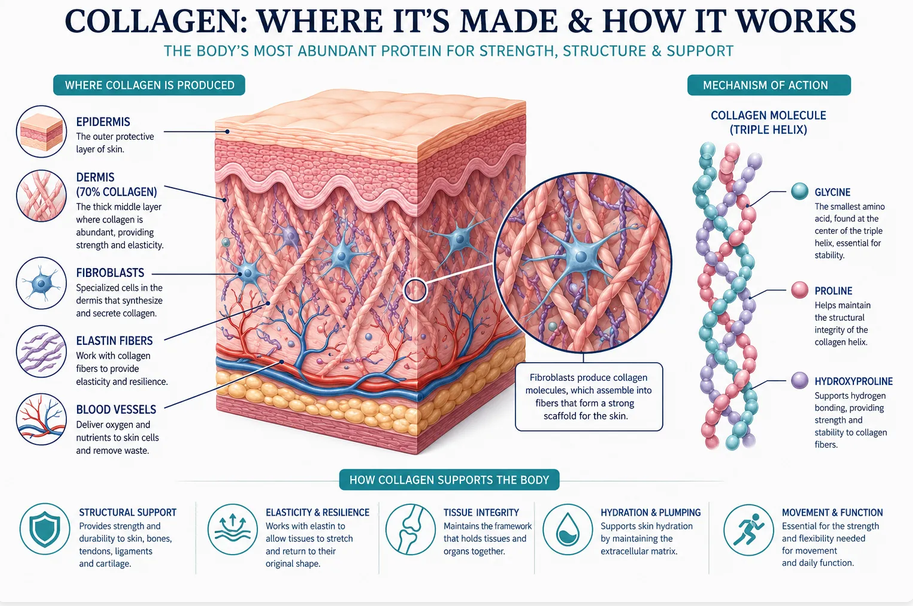
At its core, collagen is a robust, fibrous protein; in fact, it’s the most abundant protein in the human body, making up about one-third of our total protein composition.
Think of it as the scaffolding that holds everything together. It’s the primary structural protein in connective tissues, meaning it’s literally everywhere: in your skin, bones, muscles, tendons, ligaments, cartilage, and even your blood vessels and teeth.
There are at least 28 different types of collagen, but five main types make up the vast majority in our bodies:
- Type I: The most common type, found in skin, tendons, vascular ligature, organs, and bones. It’s responsible for the tensile strength of tissues.
- Type II: Primarily found in cartilage, providing flexibility and cushioning for joints.
- Type III: Common in reticular fibers, often found alongside Type I in skin, muscles, and blood vessels.
- Type IV: Forms the base of cell basement membranes, which are thin layers that support epithelial cells.
- Type V: Found in hair, the surface of cells, and the placenta.
Each type plays a unique role, but collectively, they ensure the integrity, elasticity, and regeneration of your body’s tissues.
Why Do We Need Collagen? The Age-Related Decline
As mentioned, our bodies naturally produce collagen. However, this production starts to slow down significantly as we age, typically beginning in our mid-20s. By the time we reach our 40s and 50s, the decline becomes much more noticeable. This decrease isn’t just about wrinkles; it has far-reaching effects on our entire physiology:
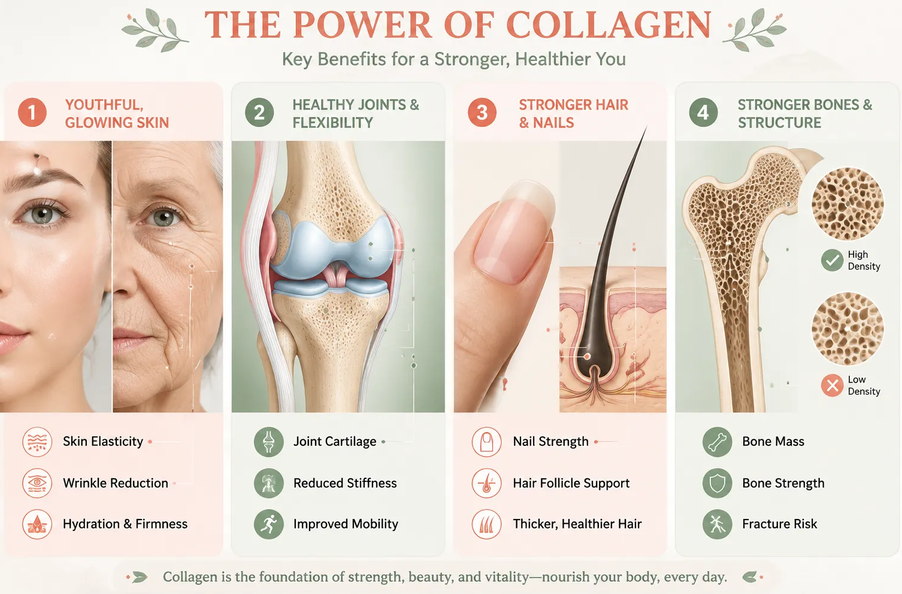
- Skin: Less collagen means reduced elasticity and hydration, leading to fine lines, wrinkles, and sagging skin.
- Joints: Cartilage, rich in Type II collagen, can thin and weaken, contributing to joint pain and stiffness.
- Bones: Bone density can decrease, making bones more brittle and susceptible to fractures.
- Muscles: Collagen is integral to muscle tissue and tendons, so its decline can impact muscle mass and strength.
- Gut Health: The lining of the digestive tract benefits from collagen for its integrity.
Lifestyle factors can also accelerate this decline. Excessive sun exposure, smoking, a diet high in sugar and processed foods, and chronic stress can all contribute to collagen breakdown.
16 Science-Backed Benefits of Collagen
1. Improves Skin Elasticity and Hydration
One of the most well-documented benefits of collagen is its effect on skin health. A 2019 meta-analysis of 19 studies found that collagen supplementation significantly improved skin elasticity and hydration after 8-12 weeks of use. Collagen peptides stimulate your body’s own fibroblasts, the cells that produce collagen and elastin, to kick production back into gear.
2. Reduces Wrinkles and Fine Lines
Collagen helps fill in the dermal matrix where wrinkles form. Several randomized, double-blind studies have shown that taking 3-10 grams of collagen peptides daily for 8 weeks or more reduces the depth and visibility of wrinkles, particularly around the eyes and mouth.
3. Supports Joint Health and Reduces Pain
If your knees crack when you climb stairs, collagen might be your new best friend. Type II collagen, especially in its undenatured form (UC-II), has been shown to reduce joint pain and stiffness in people with osteoarthritis.
A 2021 study found that athletes taking collagen experienced less joint pain during activity, which could mean faster recovery and better performance.
4. May Help Prevent Bone Loss
Bones are about one-third collagen by weight, providing the flexible framework upon which minerals like calcium deposit. Research suggests that collagen supplementation may help maintain bone mineral density, particularly in postmenopausal women who are at higher risk for osteoporosis.
A 2018 study showed that women taking 5 grams of collagen peptides daily for 12 months had significantly less bone breakdown than those taking a placebo.
5. Builds Muscle Mass
Collagen makes up a small but important percentage of muscle tissue (about 1-2%). More importantly, it’s a key component of connective tissue that attaches muscle to bone. Some studies suggest that combining collagen supplementation with resistance training can help build muscle mass and strength in older adults and sarcopenia-prone populations.
6. Strengthens Nails
Brittle, peeling nails are frustrating, and collagen may help. A 2017 study found that participants who took 2.5 grams of collagen peptides daily for 24 weeks experienced a 12% increase in nail growth and a 42% decrease in the frequency of broken nails.
7. Promotes Hair Growth and Thickness
While the research is still emerging, collagen’s amino acids, especially proline,are building blocks for keratin, the protein that makes up your hair. Anecdotal evidence and small studies suggest collagen may support hair thickness and reduce shedding, particularly in people with deficiencies.
8. Supports Gut Health and Digestion
Collagen is rich in glycine and glutamine, two amino acids that help maintain the integrity of the gut lining. Some practitioners recommend collagen for people with leaky gut syndrome or inflammatory bowel conditions, though large-scale human trials are still limited.
9. May Improve Heart Health
Collagen provides structure to your arteries and blood vessels. Without enough collagen, arteries can become stiff and less flexible, contributing to atherosclerosis. A 2017 study found that taking 16 grams of collagen daily for six months reduced arterial stiffness and improved HDL (“good”) cholesterol levels.
10. Boosts Wound Healing
Because collagen is essential for tissue repair, supplementing with it may speed up wound healing. It provides the raw materials your body needs to rebuild skin and connective tissue after injury or surgery.
11. Supports Eye Health
The cornea and the sclera (the white of your eye) are rich in collagen. Maintaining adequate collagen levels may help preserve the structural integrity of your eyes as you age, potentially reducing the risk of conditions like glaucoma.
12. May Help with Weight Management
Collagen is a pure protein source with no carbohydrates or fats. Protein is the most satiating macronutrient, meaning it helps you feel full. Adding collagen to your morning coffee or smoothie may reduce overall calorie intake by curbing hunger.
13. Supports Liver Function
The amino acid glycine, abundant in collagen, plays a role in liver detoxification. Some animal studies suggest glycine supplementation may protect the liver from alcohol-induced damage and oxidative stress, though human research is still in early stages.
14. May Improve Sleep Quality
Glycine isn’t just good for your liver; it’s also a calming neurotransmitter. Studies have shown that taking glycine before bed can improve sleep quality and reduce daytime sleepiness. Since collagen is roughly 33% glycine, it may contribute to better rest.
15. Supports Brain Health and Mood
Emerging research links glycine to improved cognitive function and mood regulation. While collagen isn’t a replacement for mental health treatment, its glycine content may offer mild mood-supporting benefits.
16. May Extend Longevity
This one’s speculative but exciting. Some researchers believe that maintaining collagen levels could slow the aging process at a cellular level, since collagen decline is closely linked to the hallmarks of aging, tissue degradation, inflammation, and reduced cellular repair.

Side Effects and Precautions
Collagen is generally considered safe, but it’s not without potential side effects. Here’s what to watch for.
Common Side Effects
- Digestive discomfort: Some people experience mild bloating, gas, or a feeling of fullness, especially when starting. This usually subsides as your body adjusts.
- Heartburn: Collagen is a protein, and high doses may trigger acid reflux in sensitive individuals.
- Unpleasant aftertaste: Some marine collagen products have a fishy taste or smell.
Rare but Possible Side Effects
- Allergic reactions: If you’re allergic to fish, shellfish, or beef, you could react to collagen derived from those sources. Always check the source.
- Kidney stone risk: Collagen is high in hydroxyproline, which your body converts to oxalate. In rare cases, very high doses may contribute to kidney stone formation in susceptible individuals.
- Elevated calcium levels: Some bone broth-based supplements contain high calcium. If you have hypercalcemia, consult your doctor.
Who Should Be Cautious?
- People with kidney disease: High protein intake can strain compromised kidneys.
- Pregnant or breastfeeding women: There’s limited safety data, so consult your healthcare provider.
- People with histamine intolerance: Some collagen sources, particularly slow-cooked bone broth, are high in histamine.
- Anyone on blood thinners: Collagen may have mild effects on blood clotting. Talk to your doctor.
Bottom line on safety: If you have a chronic health condition or take prescription medications, check with your doctor before starting any new supplement, including collagen.
Natural Food Sources of Collagen
Your body can’t absorb collagen directly from food; it has to break it down into amino acids first. But eating collagen-rich foods provides the building blocks your body needs to manufacture its own collagen.
| Food Source | Collagen Type | Key Nutrients |
|---|---|---|
| Bone broth | Types I, II, III | Glycine, proline, minerals |
| Chicken (with skin/bones) | Type II | Protein, hyaluronic acid |
| Fish and shellfish | Type I | Omega-3s, protein |
| Beef and pork | Types I, III | Protein, zinc |
| Egg whites | (Procollagen) | Proline, amino acids |
| Citrus fruits | (Cofactor) | Vitamin C |
| Berries | (Cofactor) | Antioxidants, vitamin C |
| Leafy greens | (Cofactor) | Chlorophyll, antioxidants |
Pro tip: Vitamin C is essential for collagen synthesis. Without it, the process stalls completely. That’s why sailors with scurvy literally fell apart; their bodies couldn’t make collagen.
Collagen Supplements
Collagen supplements typically come in a “hydrolyzed” form, meaning the collagen proteins have been broken down into smaller peptides. This makes them easier for your body to absorb and utilize.
Types of Collagen Supplements:
- Hydrolyzed Collagen (Collagen Peptides): The most common and versatile form. It’s highly bioavailable and easily dissolves in hot or cold liquids. Usually sourced from bovine (cow), marine (fish), or chicken.
- Gelatin: Cooked collagen. It dissolves in hot liquids and gels as it cools. Found in Jell-O and some desserts. Your body still breaks it down into amino acids, but it’s not as easily absorbed as hydrolyzed collagen.
- Undenatured Type II Collagen: This form is specifically used for joint health. It’s not broken down into peptides and works differently, thought to help “retrain” the immune system to stop attacking joint cartilage (Crowley et al., 2009).
Common Sources for Supplements:
- Bovine Collagen: Derived from cows, typically providing Type I and Type III collagen. Excellent for skin, hair, nails, bones, and gut health.
- Marine Collagen: Sourced from fish, primarily Type I collagen. Known for its superior absorption and benefits for skin, hair, and nails.
- Chicken Collagen: Often rich in Type II collagen, making it particularly beneficial for joint and cartilage health.
- Eggshell Membrane Collagen: Contains Type I, V, and X collagen, along with other beneficial compounds like hyaluronic acid and chondroitin, supporting joints and skin.
Vegan Collagen (Indirect)
While true collagen is always animal-derived, “vegan collagen” supplements have emerged. These products don’t contain actual collagen but rather a blend of plant-based ingredients (like yeast or bacteria-derived proteins) along with co-factors (Vitamin C, zinc, etc.) that aim to support your body’s natural collagen production. They are an option for those who avoid animal products but want to boost their body’s collagen synthesis.
Collagen Dosage: How Much Should You Take?
There’s no official Recommended Dietary Allowance (RDA) for collagen, but research gives us clear guidelines based on what you’re trying to achieve.
General Guidelines by Goal
| Goal | Recommended Daily Dose | Duration for Results |
|---|---|---|
| Skin health | 2.5-5 grams | 8-12 weeks |
| Joint pain relief | 5-10 grams (or 40 mg UC-II) | 8-12 weeks |
| Bone density | 5 grams | 12 months |
| Muscle building | 15 grams + resistance training | 12 weeks |
| Nail strength | 2.5 grams | 24 weeks |
| General wellness | 10-20 grams | Ongoing |
Factors That Affect Dosage
- Body weight: Larger individuals may need slightly higher doses.
- Age: Older adults may benefit from the higher end of the range.
- Diet quality: If you already eat collagen-rich foods, you may need less from supplements.
- Supplement type: Hydrolyzed peptides are absorbed more efficiently than whole collagen.
My advice: Start with 10 grams per day if you’re new to collagen. It’s a safe, effective middle-ground dose that covers most goals. Adjust from there based on results.

How to Use Collagen Effectively
Taking collagen isn’t complicated, but a few smart strategies can maximize your results.
1. Take It with Vitamin C
Since vitamin C is required for collagen synthesis, pairing your collagen with a vitamin C source, like orange juice, berries, or a supplement, can give your body the tools it needs to put those amino acids to work.
2. Time It Right
There’s no “best” time to take collagen, but many people prefer:
- Morning: Mixed into coffee or a smoothie for an easy habit.
- Before bed: The glycine content may support better sleep.
- Post-workout: To support muscle and joint recovery.
Consistency matters more than timing. Pick a time you can stick with daily.
3. Combine with Resistance Training
If your goal is muscle building or bone density, collagen alone isn’t enough. Pair it with resistance training 3-4 times per week for the best results. Studies show the combination is significantly more effective than either alone.
4. Stay Hydrated
Collagen needs water to function properly in your body. Drink plenty of water throughout the day to support absorption and utilization.
5. Be Patient
Collagen isn’t a quick fix. Most studies show measurable results after 8-12 weeks of consistent daily use. Don’t expect overnight transformations; give it at least three months before evaluating.
6. Store It Properly
Keep collagen powder in a cool, dry place away from direct sunlight. Most powders are shelf-stable for 1-2 years. Liquid collagen should be refrigerated after opening.
How to Choose a Quality Collagen Supplement
The supplement market can be overwhelming. Here’s what to look for when selecting a high-quality collagen product:
- “Hydrolyzed Collagen” or “Collagen Peptides”: These terms indicate the collagen has been broken down for better absorption.
- Source: Choose a source that aligns with your dietary preferences and doesn’t trigger allergies (bovine, marine, chicken, eggshell).
- Grass-Fed, Pasture-Raised (Bovine) or Wild-Caught (Marine): These labels often indicate higher quality and more ethical sourcing.
- Type of Collagen: Consider your primary goals. Type I & III for skin, hair, nails, bones. Type II for joints. Multi-collagen for comprehensive benefits.
- Third-Party Testing: Look for certifications from independent organizations that verify purity, potency, and absence of contaminants (e.g., NSF, GMP, Informed-Sport).
- No Unnecessary Fillers or Artificial Ingredients: Opt for products with minimal ingredients. Unflavored, unsweetened is often best.
- Dissolvability: Good quality hydrolyzed collagen should dissolve easily without clumping.
- Reputable Brand: Choose brands with good reviews and a track record of quality.
FAQs
1. Is collagen safe to take every day?
Yes, for most healthy individuals, taking collagen daily is safe and often recommended for optimal results. Side effects are rare and usually mild. However, if you have specific health concerns or are on medication, always consult your doctor first.
2. How long does it take to see results from collagen supplements?
Patience is a virtue with collagen. While some people report noticing minor improvements in skin hydration within a few weeks, more significant benefits for skin elasticity, joint pain, hair, or nails typically take 8-12 weeks of consistent daily use. Bone density improvements can take even longer, often 6-12 months.
3. Can collagen make you gain weight?
Collagen itself is a protein and relatively low in calories. It’s unlikely to cause weight gain on its own. In fact, due to its ability to promote satiety, it might even aid in weight management by helping you feel fuller for longer and potentially reducing overall calorie intake. As with any supplement, check the nutritional label for added sugars or fillers.
4. What’s the difference between collagen and gelatin?
Gelatin is essentially cooked collagen. When collagen is boiled, it breaks down into gelatin. While both offer similar amino acid profiles, gelatin forms a gel when cooled, whereas hydrolyzed collagen (collagen peptides) dissolves easily in both hot and cold liquids without gelling, making it more versatile for supplementation and often more readily absorbed.
5. Can vegans or vegetarians take collagen?
True collagen is always derived from animal sources (bovine, marine, chicken, eggshell). Therefore, traditional collagen supplements are not suitable for vegans or strict vegetarians.
However, there are “vegan collagen boosters” or “vegan collagen builders” available. These products contain a blend of plant-based proteins, vitamins (especially Vitamin C), and minerals that provide the raw materials and co-factors your body needs to produce its own collagen. They don’t contain actual collagen but support its synthesis.
6. Does heating collagen destroy its benefits?
No, hydrolyzed collagen (peptides) is quite stable and can withstand heat without losing its beneficial properties. This is why you can mix it into hot coffee, soups, or even baked goods without concern. The hydrolysis process already breaks down the protein into smaller peptides, making them resilient to further heat denaturation.
7. What’s the best time of day to take collagen?
There’s no single “best” time to take collagen; it largely depends on personal preference and your daily routine. Some prefer it in the morning to kickstart their day, others before or after a workout, and some take it before bed, hoping to leverage the glycine for improved sleep. The most important thing is consistency.
8. Can I take collagen with other supplements?
Generally, yes. Collagen can typically be safely taken alongside most other vitamins and supplements. In fact, combining it with Vitamin C is often recommended to enhance its effectiveness. If you have specific concerns or are on multiple medications, a quick chat with your healthcare provider is always a good idea.
Conclusion
Collagen is far more than just a trendy beauty ingredient; it’s a fundamental protein vital for the structural integrity and health of almost every tissue in your body. From supporting youthful skin and strong bones to promoting healthy joints, digestion, and even cardiovascular function, its benefits are extensive and profound.
While generally safe, always listen to your body and consult with a healthcare professional to ensure it’s the right choice for your individual health journey. Embrace the power of collagen, and invest in your long-term health and vitality!