Did you know that despite its widespread popularity, over 80% of adults worldwide consume less than the recommended amount of omega-3 fatty acids? This vital nutrient is a cornerstone of good health, influencing everything from our brain power to our heart’s rhythm. Derived from the tissues of oily fish, fish oil is a concentrated source of omega-3 fatty acids.
Whether you’re looking to support heart health, enhance brain function, reduce inflammation, or improve your overall wellness, fish oil might be the supplement your body has been missing. This article will explore 18 health benefits of fish oil and its potential side effects. We’ll also discuss how to use it effectively.

What is Fish Oil?
Fish oil is a dietary supplement derived from the tissues of oily fish. Think salmon, mackerel, tuna, and sardines. These fish are rich in eicosapentaenoic acid (EPA) and docosahexaenoic acid (DHA), two crucial types of omega-3 fatty acids. Our bodies can’t produce these essential fats on their own, meaning we must get them from our diet. That’s where fish oil comes in, acting as a concentrated source to bridge any nutritional gaps.
Omega-3s play a fundamental role in every cell of your body. They’re components of cell membranes, affect cell receptor function, and are the starting point for making hormones that regulate blood clotting, inflammation, and contraction and relaxation of artery walls. In essence, they’re tiny powerhouses that keep your internal systems humming.
Nutrition of Fish Oil
Fish oil is predominantly composed of omega-3 fatty acids, but understanding its complete nutritional profile helps clarify why it’s so beneficial. Here’s a breakdown of what you’ll find in a typical fish oil supplement:
| Nutrient | Amount per 1000 mg serving |
|---|---|
| Calories | 9 |
| Total Fat | 1 gram |
| EPA (Eicosapentaenoic Acid) | 180 mg |
| DHA (Docosahexaenoic Acid) | 120 mg |
| Other Omega-3 Fatty Acids | 700 mg |
| Vitamin A | 250 IU (5% DV) |
| Vitamin D | 40 IU (10% DV) |
| Cholesterol | 0 mg |
| Protein | 0 g |
| Carbohydrates | 0 g |
Note: Fish oil is virtually free from carbohydrates and protein, but rich in omega-3 fatty acids and fat-soluble vitamins. The exact EPA and DHA content varies depending on the fish species and supplement brand.
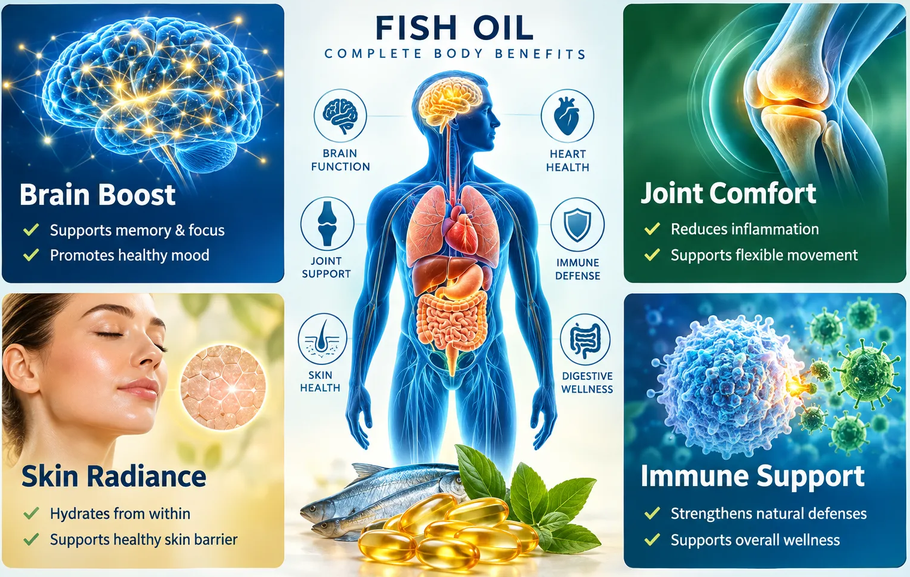
Top 18 Health Benefits of Fish Oil
1. Supports Heart Health
This is the big one. Fish oil has been studied more extensively for cardiovascular health than almost any other supplement. EPA and DHA help:
- Lower triglyceride levels by up to 30%
- Slightly raise HDL (“good”) cholesterol
- Reduce blood pressure in people with hypertension
- Prevent arterial plaque buildup
A landmark 2019 study published in the New England Journal of Medicine (the REDUCE-IT trial) found that high-dose EPA supplementation reduced major cardiovascular events by 25% in high-risk patients.
2. Boosts Brain Health and Cognitive Function
Your brain is about 60% fat, and DHA makes up a significant portion of that. Without adequate DHA, brain cell membranes become less flexible, slowing communication between neurons.
Regular fish oil intake is associated with:
- Improved memory and focus
- Faster processing speed
- Reduced risk of age-related cognitive decline
3. May Help Reduce Depression and Anxiety
This one surprises many people. Multiple clinical trials have found that EPA-rich fish oil supplements can reduce symptoms of depression, sometimes as effectively as antidepressant medications in mild-to-moderate cases.
A 2019 meta-analysis in Translational Psychiatry reviewed 26 trials and concluded that omega-3 supplementation significantly reduced depressive symptoms, with EPA showing stronger effects than DHA.

4. Protects Eye Health
DHA is a major structural component of the retina. Low DHA levels are linked to vision problems and a higher risk of age-related macular degeneration (AMD), one of the leading causes of blindness in adults over 50.
Fish oil supplementation may:
- Slow the progression of AMD
- Reduce dry eye symptoms
- Support overall retinal function
5. Reduce Chronic Inflammation
Chronic, low-grade inflammation is the silent driver behind heart disease, diabetes, cancer, and autoimmune conditions. EPA and DHA are converted in the body into resolvins and protectins, molecules that actively turn off inflammatory signals.
This makes fish oil particularly valuable for people with rheumatoid arthritis, inflammatory bowel disease, and other chronic inflammatory conditions.
6. Supports Bone and Joint Health
Osteoporosis affects over 200 million people globally. Research suggests omega-3 fatty acids may help by:
- Increasing calcium absorption in the gut
- Improving bone mineral density
- Reducing joint stiffness and tenderness in arthritis patients
One study found that fish oil supplementation combined with calcium was more effective at preserving bone density than calcium alone.
7. Promotes Healthy Fetal Development
DHA is absolutely critical during pregnancy. It supports:
- Brain development of the fetus (the brain grows rapidly in the third trimester)
- Eye and nervous system formation
- Healthy birth weight
The American Pregnancy Association recommends that pregnant women consume at least 200-300 mg of DHA per day. Fish oil supplements are one of the easiest ways to meet this target safely.
8. Aids Muscle Recovery and Exercise Performance
Athletes and fitness enthusiasts take note: fish oil can help you recover faster after intense workouts. Here’s how:
- Reduces exercise-induced muscle soreness (DOMS)
- Decreases muscle damage markers like CK (creatine kinase)
- May improve muscle protein synthesis when combined with resistance training
A 2020 review in the Journal of the International Society of Sports Nutrition confirmed that omega-3 supplementation reduced post-exercise inflammation and improved recovery time.

9. Helps Manage Blood Sugar and Reduces Type 2 Diabetes Risk
Fish oil improves insulin sensitivity and helps regulate blood glucose levels. While it won’t cure diabetes, research shows it can:
- Reduce fasting triglycerides (a key diabetes risk marker)
- Lower inflammation that contributes to insulin resistance
- Improve metabolic health in people with prediabetes
10. Supports Children’s Brain Development and Behavior
Fish oil isn’t just for adults. DHA plays a critical role in children’s cognitive development, attention, and behavior. Studies have shown that children with ADHD often have lower omega-3 levels, and supplementation may:
- Improve attention and focus
- Reduce hyperactivity
- Support reading and learning abilities
A 2012 meta-analysis in the Journal of Child Psychology and Psychiatry found significant improvements in attention and behavior with omega-3 supplementation in children with ADHD.
11. Strengthens the Immune System
EPA and DHA play a direct role in immune regulation. They help:
- Modulate the activity of immune cells (T-cells, B-cells, macrophages)
- Reduce excessive immune responses (helpful in autoimmune conditions)
- Support the body’s ability to fight infections
Research in 2026 continues to explore fish oil’s role in respiratory immunity, especially following the renewed interest in immune health post-pandemic.
12. May Improve Sleep Quality
Struggling to sleep? Low DHA levels are associated with lower melatonin production, the hormone that regulates your sleep-wake cycle. A study of children published in the Journal of Sleep Research found that DHA supplementation led to:
- Nearly 1 extra hour of sleep per night
- Fewer nighttime wakings
- Improved sleep quality scores
Adults with omega-3 deficiency may experience similar benefits from supplementation.
13. Supports Weight Management
Fish oil won’t melt fat on its own, but it can support your weight loss efforts by:
- Reducing appetite (EPA and DHA influence hunger hormones like leptin)
- Improving insulin sensitivity, which helps the body use fat for fuel
- Reducing fat storage when combined with exercise
Several studies show that people who supplement with fish oil while exercising lose more body fat than those who exercise without it.
14. May Reduce Cancer Risk
This benefit is still being researched, but early evidence is promising. Omega-3 fatty acids may help reduce the risk of certain cancers, particularly:
- Colorectal cancer (most consistent evidence)
- Breast cancer
- Prostate cancer
The proposed mechanism involves omega-3s’ ability to reduce inflammation, regulate cell growth, and trigger apoptosis (programmed cell death) in abnormal cells.
15. Supports Lung Health
Fish oil benefits extend to your respiratory system. EPA and DHA have been shown to:
- Reduce symptoms of asthma (particularly in children)
- Improve lung function in people with chronic obstructive pulmonary disease (COPD)
- Reduce airway inflammation
A diet rich in omega-3s during pregnancy may also lower the risk of asthma in children by up to 30%, according to research published in the New England Journal of Medicine.

16. Supports Liver Health
Non-alcoholic fatty liver disease (NAFLD) affects roughly 25% of the global population. Fish oil supplementation has been shown to:
- Reduce liver fat accumulation
- Lower liver enzyme levels (markers of liver damage)
- Improve overall liver function in NAFLD patients
This is one of the most underappreciated benefits of regular fish oil intake.
17. Promotes Healthy Skin
Your skin cells need healthy fats to maintain their moisture barrier and structural integrity. Fish oil supports skin health by:
- Reducing acne and inflammation-related breakouts
- Improving hydration and elasticity
- Potentially slowing UV-related skin aging
- Helping manage conditions like psoriasis and eczema
Many dermatologists in 2026 now recommend omega-3 supplementation as part of a holistic skin health protocol.
18. Slows Cognitive Aging and May Reduce Alzheimer’s Risk
Last but certainly not least, fish oil may be one of your best long-term investments in brain longevity. DHA is essential for maintaining the structural integrity of brain cells as we age. Research suggests:
- Higher omega-3 levels are associated with larger brain volume in older adults
- Regular fish oil intake may slow the progression of mild cognitive impairment
- EPA and DHA may reduce amyloid plaque formation linked to Alzheimer’s disease

Potential Side Effects of Fish Oil
While fish oil is generally well-tolerated, awareness of potential side effects ensures safe and effective use.
1. Fishy Aftertaste and Burps
One of the most common complaints involves the characteristic “fishy” taste and burps that occur after fish oil supplementation. Enteric-coated capsules, refrigerated storage, and taking supplements with meals can minimize this unpleasant side effect. Taking fish oil with food significantly reduces the occurrence of fishy aftertaste.
2. Gastrointestinal Upset
Some individuals experience mild digestive discomfort, including nausea, bloating, or loose stools, particularly when first beginning supplementation or using high doses. Starting with lower doses and gradually increasing, along with taking fish oil with food, typically resolves these issues within a few days.
3. Nosebleeds or Increased Bleeding
At high doses, fish oil’s blood-thinning properties may increase bleeding risk in susceptible individuals. People prone to nosebleeds or easy bruising should start with lower doses and monitor their response carefully. Discontinue if bleeding concerns arise.
4. Blood Thinning and Medication Interactions
Fish oil can interact with anticoagulant and antiplatelet medications like warfarin or aspirin, potentially increasing bleeding risk. Individuals taking these medications must consult healthcare providers before starting fish oil supplementation.
5. Allergic Reactions
Though uncommon, some people may experience allergic reactions to fish oil, including itching, rashes, swelling, or breathing difficulty. Individuals with known fish allergies should absolutely avoid fish oil supplements unless using algae-based omega-3 alternatives.
6. Lowered Blood Sugar Levels
In some cases, fish oil may help lower blood sugar, which could be problematic for diabetic individuals taking blood sugar-lowering medications. Regular monitoring ensures that blood sugar remains within safe ranges.
7. Lower Blood Pressure
Fish oil’s cardiovascular benefits include potential blood pressure reduction. While beneficial for most people, those taking antihypertensive medications should monitor blood pressure and consult healthcare providers about appropriate dosing.
8. Vitamin A Toxicity (in high doses)
Since some fish oil supplements contain vitamin A, extremely high doses taken over extended periods could theoretically lead to vitamin A accumulation. Choosing supplements with moderate vitamin A content prevents this concern.
9. Contaminant Concerns with Poor Quality Supplements
Inferior fish oil supplements may contain mercury, PCBs, or other environmental contaminants concentrated from ocean water. Choosing reputable brands with third-party testing ensures purity and safety.
10. Possible Interactions with Certain Conditions
Individuals with bipolar disorder, those prone to mania, or those with specific bleeding disorders should consult healthcare providers before using fish oil, as it may interact with their conditions or medications.

How to Take Fish Oil?
Fish oil is available in multiple convenient forms suited to different preferences and needs.
1. Soft Gel Capsules (Most Common)
Soft gel capsules represent the most popular fish oil format. Typical dosages range from 500 mg to 2000 mg per capsule, with most people taking one to three capsules daily. The enclosed capsule format prevents oxidation and eliminates the fishy taste for many users.
2. Liquid Fish Oil
Liquid fish oil offers maximum absorption and allows precise dosage adjustment. While some people find the taste objectionable, others appreciate the flexibility. Liquid formulations work well for individuals unable to swallow capsules.
3. Fish Oil Gummies
Gummy supplements provide a palatable option, particularly for children or those averse to pills. However, gummies typically contain lower omega-3 concentrations than capsules or liquid forms and often include added sugars.
4. Whole Fish Consumption
Eating oily fish two to three times weekly provides natural omega-3 fatty acids without supplementation. Salmon, mackerel, sardines, and anchovies offer excellent omega-3 sources, though some people prefer supplements for convenience and consistency.
5. Algae-Based Omega-3 Alternatives
For vegetarians, vegans, or those with fish allergies, algae-based supplements provide EPA and DHA directly without fish involvement. While more expensive, algae supplements eliminate contamination concerns and allergen risks.
Fish Oil Dosage Guidelines
Determining appropriate fish oil dosage depends on individual health goals and circumstances.
| Purpose | Recommended Dosage | Duration |
|---|---|---|
| General wellness | 500-1000 mg daily | Ongoing |
| Heart health support | 1-3 grams daily | Ongoing |
| Triglyceride reduction | 2-4 grams daily | 8-12 weeks minimum |
| Joint health | 1-3 grams daily | 8-12 weeks minimum |
| Brain and cognitive support | 1-2 grams daily | Ongoing |
| Mood and mental health | 1-2 grams daily | 4-8 weeks minimum |
| Skin health | 1-2 grams daily | 8-12 weeks |
| Athletic recovery | 1-2 grams daily | Ongoing |
Most health professionals recommend starting with 1000-2000 mg daily of combined EPA and DHA for general wellness purposes. Individual needs vary based on age, health status, diet, and specific health goals, so consulting healthcare providers ensures optimal dosing.
Best Time to Take Fish Oil
Strategic timing enhances fish oil effectiveness and minimizes side effects.
- Taking fish oil with meals significantly improves absorption and reduces digestive upset and fishy aftertaste.
- Morning supplementation with breakfast supports consistent daily routines and provides anti-inflammatory benefits throughout the day.
- Evening supplementation works equally well for those preferring nighttime intake.
- Some research suggests taking fish oil before workouts may enhance athletic recovery, though timing flexibility remains acceptable.
Tips for Taking Fish Oil Effectively
- Start with lower doses—approximately 500-1000 mg daily—and gradually increase over one to two weeks. This gentle introduction allows your body to acclimate and minimizes gastrointestinal upset.
- Always take fish oil with food to enhance absorption and reduce digestive discomfort.
- Consistency matters more than timing; taking fish oil at the same time daily helps establish routine and supports steady benefit accumulation.
- Store fish oil in a cool, dark place or refrigerate to prevent oxidation and maintain potency.
- Keep detailed records of your health metrics, energy levels, mood, and any symptoms you notice to identify optimal dosing and track benefits.
- Choose supplements from reputable manufacturers providing third-party testing verification, ensuring purity, potency, and contaminant-free products.
Precautions and Important Interactions
Understanding potential interactions and necessary precautions ensures safe fish oil use.
- Never exceed recommended dosages unless specifically instructed by qualified healthcare providers.
- If you take blood thinners, antiplatelet medications, or blood pressure drugs, consult your doctor before starting fish oil. Perform allergy checks if you have shellfish or fish sensitivities before trying fish oil.
- Discontinue use immediately if you experience unusual bleeding, excessive bruising, or signs of allergic reactions.
- If you’re scheduled for surgery, inform your healthcare team about fish oil use and discontinue 1-2 weeks before procedures.
- Keep detailed records of any symptoms or changes you experience when starting fish oil to identify potential interactions.
- Never use fish oil as a substitute for medical treatment without professional guidance.
- If you experience persistent gastrointestinal upset, allergic symptoms, or other concerning effects, discontinue use and consult your healthcare provider.
FAQs
How long does it take for fish oil to work?
Most people begin noticing benefits within 2-4 weeks of consistent supplementation, though individual timelines vary significantly. Cardiovascular improvements typically require 8-12 weeks of daily use. Mood and cognitive benefits often appear within 4-6 weeks. Skin improvements usually become visible within 6-8 weeks.
Can I take fish oil every day?
Yes, fish oil is safe for daily use at recommended dosages. Most people benefit from daily supplementation of 1-3 grams combined EPA and DHA. Consistency proves more important than occasional high doses.
Is fish oil safe for children?
Fish oil can benefit children, particularly for cognitive development and learning support. However, pediatric dosing differs significantly from adult recommendations. Typical children’s dosages range from 250-500 mg daily. Always consult pediatricians before giving fish oil to children.
What’s the difference between fish oil and krill oil?
Both contain omega-3 fatty acids but derive from different sources. Krill oil comes from tiny crustaceans and contains astaxanthin, a powerful antioxidant. Krill oil may be absorbed more efficiently but costs significantly more than fish oil.
Does fish oil expire?
Yes, fish oil can expire and oxidize, particularly if stored improperly. Check expiration dates and discard supplements past their expiration dates. Proper storage extends shelf life significantly.
Is wild-caught or farm-raised fish oil better?
Wild-caught fish oil typically contains higher astaxanthin and phytosterol concentrations. However, quality supplements from either source should contain minimal contaminants. Third-party testing ensures safety regardless of source.
Can I take fish oil if I’m pregnant?
Fish oil can benefit pregnancy when used appropriately, particularly for fetal brain development. However, pregnant women should use medical-grade prenatal fish oil under healthcare provider guidance to ensure purity and appropriate dosing.
Does fish oil cause weight gain?
Fish oil itself does not cause weight gain. In fact, omega-3 fatty acids support healthy weight management by enhancing fat oxidation and improving metabolic function.
Conclusion: Should You Add Fish Oil to Your Routine?
Fish oil isn’t a miracle cure, but it’s one of the rare supplements with a genuinely strong body of research behind it.
Here’s my honest advice: start simple. If you’re not eating fatty fish twice a week, a basic fish oil supplement with 1,000-2,000 mg of combined EPA/DHA is a reasonable place to begin. Choose a third-party tested brand, take it consistently, and give it a few months before expecting noticeable changes; omega-3s work gradually, not overnight.
As always, check with your doctor before starting any new supplement, especially if you’re pregnant, on medication, or managing a health condition. But for most healthy adults, fish oil is a low-risk, well-researched way to support long-term health from the inside out.