
Approximately 68% of adults in the United States are bothered by excess fat under the chin, also known as submental fullness or a double chin. This makes it almost as prevalent a concern as wrinkles around the eyes. This common aesthetic issue can significantly impact self-perception and confidence, often making individuals appear older or heavier than they are.
The good news is that you don’t necessarily need expensive treatments or invasive procedures to address this concern. Natural remedies and lifestyle adjustments can also help reduce the appearance of a double chin. In this article, we’ll explore 18 natural remedies to help you reduce your double chin quickly.
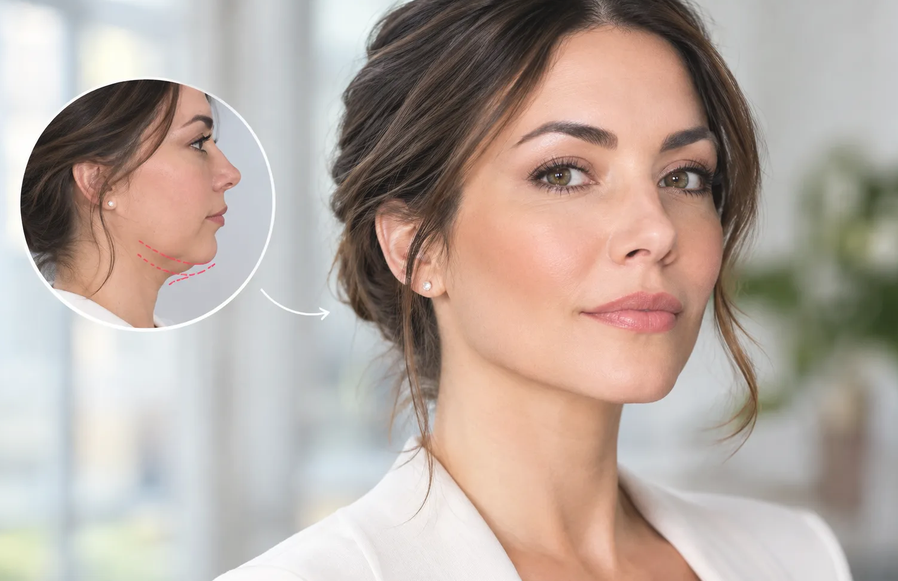
Understanding a Double Chin: Causes and Composition
To effectively get rid of a double chin, it’s crucial to first understand what it is and what causes it. A double chin, medically referred to as submental fullness, is characterized by an accumulation of fat and sometimes loose skin beneath the chin and along the neck. It creates a secondary bulge, blurring the natural jawline and neck contour.
Several factors contribute to the development of a double chin:
1. Submental Fat
This is the primary culprit. Adipose tissue (fat) can accumulate in the submental region, just like it can anywhere else on the body. This fat pad can be stubborn, often resisting general weight loss efforts, especially in individuals predisposed to storing fat in this specific area.
2. Genetics
Your genes play a significant role in determining where your body stores fat. If your parents or other close relatives had a double chin, you are more likely to develop one, regardless of your weight. Genetic predisposition means that even lean individuals can struggle with submental fullness.
3. Age
As we age, our skin naturally loses collagen and elastin, the proteins responsible for its firmness and elasticity. This leads to sagging skin, not just on the face but also under the chin, contributing to the appearance of a double chin, even if there isn’t a significant amount of fat.
The platysma muscle, a broad sheet of muscle in the neck, can also weaken and separate with age, leading to a “banded” or “turkey neck” appearance that exacerbates the problem.
4. Weight Gain
While not the only factor, gaining weight generally increases fat stores throughout the body, including under the chin. Conversely, significant weight loss can sometimes reduce the appearance of a double chin, but it may also leave behind loose skin.
5. Poor Posture
Habitual slouching or looking down at devices (often called “tech neck”) can weaken the neck muscles and contribute to skin laxity and a less defined jawline. While not a direct cause of fat accumulation, poor posture can certainly make an existing double chin more noticeable.
Lifestyle Changes to Reduce a Double Chin
Before considering cosmetic procedures, it’s important to address lifestyle factors that can contribute to a double chin. While these changes may not eliminate a genetically predisposed or age-related double chin entirely, they can significantly reduce its appearance and enhance the results of other treatments.
1. Diet and Weight Management
One of the most direct ways to reduce submental fat is through overall weight loss. When you lose weight, your body typically reduces fat stores across all areas, including under the chin.
- Balanced Diet: Focus on a diet rich in whole foods, lean proteins, fruits, and vegetables. Limit processed foods, sugary drinks, and unhealthy fats.
- Prioritize lean proteins: Chicken, fish, tofu, beans.
- Eat plenty of fiber: Whole grains, fruits, vegetables.
- Choose healthy fats: Avocados, nuts, olive oil.
- Stay hydrated: Drink plenty of water throughout the day.
- Portion Control: Be mindful of portion sizes to create a caloric deficit necessary for weight loss.
- Consult a Professional: A registered dietitian or nutritionist can provide personalized guidance to help you achieve a healthy weight.
2. Regular Exercise
Incorporating regular physical activity into your routine helps burn calories and reduce overall body fat. Aim for a combination of cardiovascular exercises and strength training.
- Cardio: Activities like brisk walking, jogging, swimming, or cycling for at least 150 minutes of moderate-intensity or 75 minutes of vigorous-intensity exercise per week.
- Strength Training: Build muscle mass, which helps boost metabolism, at least two days a week.
3. Improving Posture
Good posture can make a noticeable difference in how your jawline and neck appear. When you slouch, the skin and fat under your chin can hang more prominently.
- Sit and Stand Tall: Keep your back straight, shoulders back, and chin parallel to the floor.
- Ergonomics: Ensure your workstation is set up ergonomically, with your computer screen at eye level, to prevent “tech neck.”
- Mindful Awareness: Regularly check your posture throughout the day, especially when using electronic devices.
While lifestyle changes are fundamental for general health and can contribute to a reduction in submental fat, it’s important to manage expectations. For many, these changes alone may not be enough to completely get rid of a double chin, particularly if genetics or significant skin laxity are primary factors.

Facial Exercises to Get Rid of a Double Chin
While there’s limited scientific evidence to conclusively prove that facial exercises can completely eliminate a double chin, many people report anecdotal success in toning the muscles around the jaw and neck, which can lead to a more defined appearance.
Here are some popular facial exercises believed to help get rid of a double chin:
1. Tongue Press (Chin-Up Exercise)
This exercise targets the muscles under your chin and at the front of your neck.
- Preparation: Sit or stand with your back straight and shoulders relaxed.
- Execution: Look straight ahead. Press your tongue firmly against the roof of your mouth.
- Hold and Repeat: While pressing, slowly tilt your head back until you feel a stretch in your neck and under your chin. Hold for 5-10 seconds. Relax and return to the starting position. Repeat 10-15 times.
2. Pucker Up (Kiss the Ceiling)
This exercise helps to stretch and strengthen the muscles in your jaw and neck.
- Preparation: Sit or stand comfortably.
- Execution: Tilt your head back, looking up at the ceiling. Pucker your lips as if you’re trying to kiss the ceiling. You should feel a stretch in your neck and under your chin.
- Hold and Repeat: Hold the pucker for 5-10 seconds. Relax and return your head to a normal position. Repeat 10-15 times.
3. Jaw Jut
This exercise works the muscles around your jawline.
- Preparation: Sit or stand with your back straight.
- Execution: Tilt your head back slightly. Push your lower jaw forward until you feel a stretch under your chin.
- Hold and Repeat: Hold for 5-10 seconds. Relax and return to the starting position. Repeat 10-15 times.
4. Neck Stretch (Side to Side)
This helps improve flexibility and tone in your neck muscles.
- Preparation: Sit or stand straight.
- Execution: Slowly tilt your head to one side, trying to touch your ear to your shoulder without raising your shoulder. Hold for 15-20 seconds. Repeat on the other side.
- Frequency: Perform 3-5 times on each side.
5. Ball Exercise
Using a small, soft ball (like a stress ball or tennis ball) can provide resistance.
- Preparation: Place a 5-10 inch ball under your chin.
- Execution: Press your chin down against the ball, applying gentle pressure.
- Hold and Repeat: Repeat 10-20 times per session.
Important Considerations for Facial Exercises:
- Consistency: Perform these exercises daily for several weeks or months to see potential results.
- Gentle Approach: Avoid over-stretching or straining your neck muscles.
- Realistic Expectations: Facial exercises are not a substitute for medical treatments for significant fat or loose skin. They are best viewed as a supplemental approach to improve muscle tone.
Non-Surgical Treatments to Get Rid of a Double Chin
For individuals seeking more definitive results without undergoing surgery, a range of non-surgical treatments are available. These options are effective for reducing submental fat and, in some cases, tightening skin, offering noticeable improvements with minimal downtime.
1. Kybella (Deoxycholic Acid Injections)
Kybella is an injectable treatment specifically designed to reduce moderate to severe fat below the chin. It contains synthetic deoxycholic acid, a naturally occurring molecule in the body that aids in the breakdown and absorption of dietary fat.
- Mechanism: When injected into the submental fat, Kybella destroys fat cells. Once destroyed, these cells can no longer store or accumulate fat, leading to a permanent reduction in the double chin.
- Procedure: Multiple small injections are administered during a session, typically lasting 15-20 minutes.
- Sessions: Most patients require 2-4 treatment sessions, spaced at least one month apart, depending on the amount of fat and desired results. Some may need up to 6 sessions.
- Downtime: Common side effects include swelling, bruising, pain, numbness, and redness, which typically resolve within a few days to a week.
- Results: Gradual, visible contouring of the jawline as the fat cells are metabolized. Final results are usually seen a few weeks after the last treatment.
2. CoolSculpting Mini (Cryolipolysis)
CoolSculpting Mini is a non-invasive procedure that uses controlled cooling to freeze and destroy fat cells. It is specifically designed with an applicator that targets the smaller, curved area under the chin.
- Mechanism: Fat cells are more susceptible to cold than other tissue. The CoolSculpting device applies controlled cooling to the targeted area, causing fat cells to crystallize and die. These dead fat cells are then naturally processed and eliminated by the body over time.
- Procedure: The applicator is placed under the chin, and a vacuum draws the tissue into the cup. The cooling sensation can last for a few minutes before the area becomes numb. A session typically lasts 45-60 minutes.
- Sessions: Many patients see significant results after 1-2 sessions, spaced 1-2 months apart.
- Downtime: Minimal to no downtime. Patients may experience temporary redness, swelling, bruising, tingling, numbness, or tenderness in the treated area.
- Results: Noticeable fat reduction within 1-3 months, with continued improvement for up to 6 months.
3. Radiofrequency (RF) Skin Tightening
While not primarily a fat-reduction treatment, RF energy can be very effective for tightening loose skin under the chin, which often accompanies or contributes to a double chin, especially due to aging or weight loss.
- Mechanism: RF devices deliver controlled heat energy to the deeper layers of the skin, stimulating collagen and elastin production. This process tightens existing collagen fibers and encourages the formation of new ones, leading to firmer, smoother skin.
- Procedure: A handheld device is moved over the treated area, delivering warming sensations.
- Sessions: A series of sessions (typically 3-6) are often recommended, spaced a few weeks apart.
- Downtime: Generally none. Mild redness might occur immediately after treatment but subsides quickly.
- Results: Gradual skin tightening and improved skin texture over several months as collagen remodeling occurs.
4. Ultherapy (Focused Ultrasound)
Ultherapy uses focused ultrasound energy to lift and tighten skin on the neck, chin, and brow, and improve lines and wrinkles on the décolletage.
- Mechanism: Ultherapy delivers precise amounts of ultrasound energy to the foundational layers of the skin, stimulating the body’s natural healing process to produce new collagen and elastin.
- Procedure: A smooth applicator is placed on the skin, delivering ultrasound energy. The procedure can take 30-90 minutes.
- Sessions: Typically one session is sufficient, though some individuals may benefit from additional treatments.
- Downtime: No downtime. Some patients experience temporary redness, slight swelling, tingling, or tenderness.
- Results: Initial lift and tone can be seen immediately, but the full effect develops gradually over 2-3 months as new collagen is generated.
These non-surgical options offer effective ways to get rid of a double chin for many individuals, balancing desired results with the convenience of minimal invasiveness and recovery. A consultation with a qualified aesthetic professional is essential to determine the most suitable treatment plan.

Surgical Options for a Double Chin
For those with significant submental fat or considerable skin laxity, surgical interventions can provide the most dramatic and lasting results to get rid of a double chin.
These procedures are performed by a board-certified plastic surgeon and involve a more significant recovery period than non-surgical options.
1. Submental Liposuction
Submental liposuction is a surgical procedure specifically designed to remove excess fat from beneath the chin and along the jawline. It is ideal for individuals with good skin elasticity who primarily struggle with localized fat deposits.
- Procedure: A small incision (typically 2-4 mm) is made discreetly under the chin or behind the ears. A thin tube called a cannula is inserted through the incision and used to gently suction out the excess fat. The procedure is often performed under local anesthesia with sedation.
- Benefits: Effectively removes stubborn fat, creating a more defined jawline and neck contour.
- Downtime: Swelling and bruising are common, typically lasting 1-2 weeks. A compression garment is usually worn for several days to weeks to help reduce swelling and support the new contour.
- Results: Noticeable improvement in contour immediately, with final results becoming apparent as swelling subsides over several weeks to months. The fat cells removed are permanently gone.
2. Neck Lift (Platysmaplasty and Cervicoplasty)
A neck lift is a comprehensive surgical procedure that addresses both excess fat and loose, sagging skin, as well as muscle banding in the neck. It is suitable for individuals with moderate to severe signs of aging in the neck and jaw area.
- Components:
- Cervicoplasty: Focuses on removing excess skin.
- Platysmaplasty: Involves tightening or removing portions of the platysma muscle, which can create vertical bands in the neck.
- Procedure: Incisions are typically made under the chin and/or behind the ears. The surgeon tightens the underlying muscles, removes excess fat (often with liposuction), and trims away loose skin before redraping the remaining skin smoothly. This procedure is usually performed under general anesthesia.
- Benefits: Provides a more youthful, taut, and defined neck and jawline contour. Can significantly reduce the appearance of a double chin and “turkey neck.”
- Downtime: More extensive downtime than liposuction, typically 2-4 weeks. Swelling, bruising, and discomfort are expected. A compression garment is required for several weeks.
- Results: Dramatic and long-lasting improvement in neck and jawline contour, with results becoming fully visible after several months as healing progresses.
3. Combination Procedures
In many cases, a combination of procedures may be recommended for optimal results. For instance, submental liposuction might be combined with a neck lift to address both fat removal and skin tightening. Some surgeons may also combine liposuction with a non-surgical skin tightening treatment for patients with mild skin laxity.
Choosing a surgical option to get rid of a double chin requires careful consideration and a thorough consultation with a board-certified plastic surgeon. They will assess your anatomy, discuss your aesthetic goals, and recommend the most appropriate procedure or combination of procedures.
Who Is a Good Candidate for Double Chin Treatments?
Here’s a breakdown of who might be a good candidate for different types of double chin treatments:
Candidates for Lifestyle Changes and Facial Exercises
- Mild Submental Fullness: Individuals with a very subtle double chin, often exacerbated by poor posture or slight weight gain.
- Early Stages: Those who are just starting to notice a double chin and want to try conservative methods first.
- Complementary Approach: Anyone looking to support other treatments or maintain results through improved muscle tone and general health.
- Good Overall Health: Individuals committed to dietary changes and regular exercise.
Candidates for Non-Surgical Treatments (Kybella, CoolSculpting Mini, RF, Ultherapy)
- Moderate Submental Fat: Patients with noticeable fat under the chin but who still have relatively good skin elasticity.
- No Significant Skin Laxity: While some non-surgical treatments offer skin tightening benefits (RF, Ultherapy), they are best for mild to moderate skin looseness, not severe sagging.
- Desire for Non-Invasive Options: Individuals who prefer to avoid surgery, anesthesia, and significant downtime.
- Realistic Expectations: Patients who understand that results are gradual and may require multiple sessions.
- Good General Health: No underlying conditions that would contraindicate these procedures.
Candidates for Surgical Treatments (Liposuction, Neck Lift)
- Significant Submental Fat: Individuals with a substantial amount of fat under the chin that non-surgical methods may not fully address.
- Moderate to Severe Skin Laxity: Patients with loose, sagging skin, often referred to as “turkey neck,” or prominent platysmal bands.
- Good Skin Elasticity (for Liposuction): For liposuction alone, the skin must have enough elasticity to retract smoothly over the newly contoured area.
- Realistic Expectations: Patients who understand the nature of surgery, including recovery time, potential risks, and the permanence of results.
- Excellent Overall Health: Non-smokers, without uncontrolled chronic conditions that could complicate surgery or recovery.
- Stable Weight: Individuals who are at or near their ideal body weight and committed to maintaining it post-surgery.
Consult with a Professional
The most important step in determining the right treatment plan is to schedule a consultation with a qualified and experienced medical professional, such as a board-certified plastic surgeon, dermatologist, or aesthetic physician. During this consultation, they will:
- Assess your unique anatomy: Evaluate the amount of fat, the degree of skin laxity, and the underlying muscle structure.
- Discuss your medical history: Ensure you are a safe candidate for the proposed treatments.
- Understand your goals: Listen to your concerns and what you hope to achieve.
- Explain options: Detail the benefits, risks, and expected outcomes of each suitable treatment.
- Develop a personalized plan: Recommend the most effective path to help you get rid of a double chin.
By engaging in an open and honest discussion with a specialist, you can make an informed decision and embark on the most appropriate journey to achieve a more defined and confident profile.
Conclusion
A double chin can be a persistent source of self-consciousness for many, but the solutions for how to get rid of a double chin are more numerous and effective than ever before. From fundamental lifestyle adjustments that impact overall health and well-being to targeted facial exercises designed to tone the jaw and neck, conservative approaches offer a starting point for subtle improvements.
For those seeking more pronounced results, the landscape of aesthetic medicine provides a robust array of non-surgical options like Kybella, CoolSculpting Mini, and various skin-tightening technologies, each capable of significantly reducing fat or firming skin with minimal downtime. When fat accumulation or skin laxity is extensive, surgical interventions such as submental liposuction or a comprehensive neck lift offer the most dramatic and long-lasting transformations.


