The gnawing sensation, the sharp stab, or the persistent dull ache in your lower right abdomen can be more than just a fleeting discomfort; it can be a sign that something significant is happening within your body. Studies indicate that abdominal pain accounts for over 7% of all emergency department visits in the United States, with the lower right quadrant being a common area of concern due to the vital organs housed there.
Understanding the potential causes, symptoms, and when to seek help for lower right abdominal pain is crucial for proactive health management. In this article, we will explore 16 of the most common causes of lower right abdominal pain and explain what each one feels like. This can help you figure out when it’s time to call a doctor versus when you can safely wait it out.
⚠️ Important: This article provides general information only. Not intended as medical advice. Consult your doctor before trying any remedies.
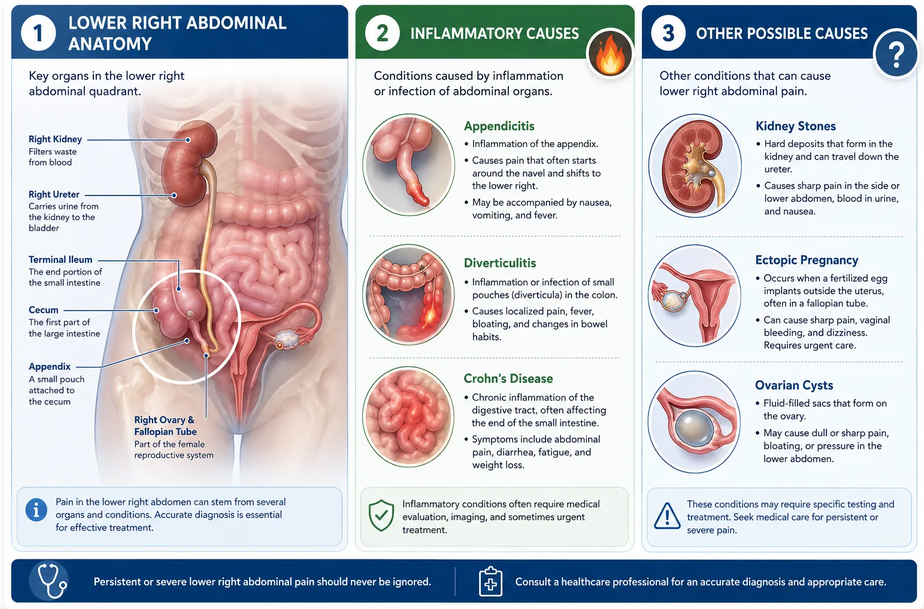
Key Organs in the Lower Right Abdominal Quadrant
The human abdomen is a complex region, and understanding its quadrants helps pinpoint potential sources of pain. The lower right abdominal quadrant is home to several vital organs, each capable of causing discomfort if inflamed, infected, or otherwise compromised.
- Appendix: A small, finger-shaped pouch projecting from the large intestine. It has no known vital function but can become inflamed, leading to appendicitis.
- Cecum: The beginning of the large intestine, receiving digested food material from the small intestine.
- Terminal Ileum: The final section of the small intestine, connecting to the large intestine (cecum).
- Right Ureter: The tube that carries urine from the right kidney to the bladder.
- Right Ovary and Fallopian Tube (in females): Reproductive organs vital for fertility.
- Portions of the Large Intestine: Specifically, the ascending colon.
- Right Spermatic Cord (in males): Contains blood vessels and nerves supplying the testicle.
- Muscles, Nerves, and Blood Vessels: These structures also traverse the region and can be sources of pain.
Lower Right Abdominal Pain: 16 Common Causes
Let’s delve into 16 common causes of lower right abdominal pain, their symptoms, what they feel like, and typical treatments.
1. Appendicitis
Appendicitis is an inflammation of the appendix, a small, finger-shaped pouch that projects from your large intestine. It’s one of the most common causes of acute lower right abdominal pain and can affect anyone, though it’s most common in people aged 10-30.
- Symptoms: Nausea, vomiting, loss of appetite, low-grade fever, constipation or diarrhea.
- What it feels like: The pain often begins around the navel and then shifts to the lower right abdomen, typically worsening over 12-24 hours. It might feel like a sharp, stabbing pain that intensifies with movement, coughing, or sneezing. Tenderness to the touch in the lower right side is common.
- Treatment: Appendicitis is a medical emergency. You should see a general physician or go to the emergency room immediately. Treatment almost always involves surgery to remove the appendix (appendectomy), often performed laparoscopically. Delaying treatment can lead to a ruptured appendix, which is a more serious condition.
2. Kidney Stones
Kidney stones are hard deposits of minerals and salts that form inside your kidneys. They can cause excruciating pain when they travel from the kidney through the ureter to the bladder.
- Symptoms: Severe pain in the side and back, below the ribs; pain that radiates to the lower abdomen and groin; painful urination; pink, red, or brown urine; cloudy or foul-smelling urine; nausea; vomiting; fever and chills (if infection is present).
- What it feels like: The pain is often described as one of the most severe types of pain imaginable. It comes in waves, varying in intensity, and is often felt in the lower right back, radiating down to the lower right abdomen and groin.
- Treatment: You should see a urologist or general physician. Small stones may pass on their own with increased fluid intake and pain relievers. Larger stones might require medical procedures like lithotripsy (using sound waves to break up stones) or surgery (ureteroscopy, percutaneous nephrolithotomy) to remove them.
3. Irritable Bowel Syndrome (IBS)
IBS is a common disorder that affects the large intestine. It’s a chronic condition you’ll need to manage long-term.
- Symptoms: Abdominal pain or cramping, bloating, gas, diarrhea, constipation, or alternating bouts of both.
- What it feels like: The pain can vary in intensity and location, but it often localizes in the lower abdomen, including the lower right side. It’s typically relieved after a bowel movement. The pain might feel like cramping or a dull ache.
- Treatment: You should see a gastroenterologist or general physician. Treatment focuses on managing symptoms through diet changes (e.g., low FODMAP diet), stress management, and medications to control diarrhea, constipation, or pain.
4. Inflammatory Bowel Disease (IBD)
IBD is an umbrella term used to describe disorders that involve chronic inflammation of your digestive tract, most commonly Crohn’s disease and ulcerative colitis. Crohn’s disease can affect any part of the digestive tract from mouth to anus, but it often impacts the small intestine and the beginning of the large intestine, including the lower right abdomen.
- Symptoms: Diarrhea, abdominal pain and cramping, fever, fatigue, blood in stool, reduced appetite, unintended weight loss.
- What it feels like: The pain is often cramping or aching and can be persistent. For Crohn’s disease affecting the ileum (the end of the small intestine), pain is typically felt in the lower right abdomen.
- Treatment: You should see a gastroenterologist. Treatment involves anti-inflammatory drugs, immune system suppressors, biologics, and sometimes surgery to remove damaged portions of the digestive tract.
5. Diverticulitis
Diverticulitis occurs when small, bulging pouches (diverticula) in the digestive tract become inflamed or infected. While most common in the lower left colon, it can sometimes occur in the right side, especially in Asian populations.
- Symptoms: Constant pain that persists for several days, nausea, vomiting, fever, abdominal tenderness, constipation or, less commonly, diarrhea.
- What it feels like: The pain is usually constant and can be severe, often localizing to the lower right abdomen if diverticula are present there. It can feel like a deep, persistent ache or tenderness.
- Treatment: You should see a general physician or gastroenterologist. Treatment typically involves antibiotics, a liquid diet for a few days to rest the bowel, and pain relievers. In severe cases or with complications, surgery might be necessary.

6. Hernia
A hernia occurs when an organ or fatty tissue squeezes through a weak spot in a surrounding muscle or connective tissue. Inguinal hernias (in the groin) are common and can cause pain in the lower right abdomen or groin area.
- Symptoms: A bulge in the area on either side of your pubic bone, a burning or aching sensation at the bulge, pain or discomfort in the groin, especially when bending over, coughing, or lifting, a heavy or dragging sensation in your groin, weakness or pressure in your groin.
- What it feels like: You might feel a dull ache or discomfort, which can worsen with physical activity. There might be a noticeable lump or bulge that you can push back in, or that disappears when you lie down.
- Treatment: You should see a general physician or surgeon. Treatment often involves watchful waiting for small, asymptomatic hernias. However, surgery is usually recommended to repair the opening and prevent complications like incarceration (when the tissue gets trapped) or strangulation (when blood supply is cut off).
7. Ectopic Pregnancy
An ectopic pregnancy occurs when a fertilized egg implants outside the uterus, most commonly in a fallopian tube. This is a medical emergency as the fallopian tube can rupture.
- Symptoms: Sharp pain in the lower abdomen (often on one side), vaginal bleeding, nausea, vomiting, dizziness, weakness, shoulder pain (if there’s internal bleeding).
- What it feels like: The pain is usually sharp, sudden, and severe, often localized to the lower right or left abdomen. It can feel like a persistent, intense cramp.
- Treatment: This is a medical emergency. You should go to the emergency room immediately. Treatment usually involves medication (methotrexate) to stop the growth of the embryo, or surgery to remove the ectopic tissue and sometimes the affected fallopian tube.
8. Ovarian Cysts
Ovarian cysts are fluid-filled sacs that develop on the surface of an ovary. Most are harmless and disappear on their own, but large cysts or ruptured cysts can cause pain.
- Symptoms: Pelvic pain (can be dull or sharp), fullness or heaviness in your abdomen, bloating, pain during bowel movements, pain during sex, nausea, vomiting.
- What it feels like: If the cyst is on the right ovary, the pain will be in the lower right abdomen. It can be a dull, constant ache or a sudden, sharp pain if the cyst ruptures or causes ovarian torsion (twisting of the ovary).
- Treatment: You should see a gynecologist or general physician. Treatment depends on the size and type of the cyst and your symptoms. It can range from watchful waiting and pain medication to hormonal birth control to prevent new cysts, or surgery to remove the cyst or ovary.
9. Ovarian Torsion
Ovarian torsion is a rare but serious condition where an ovary (and sometimes the fallopian tube) twists around the ligaments that hold it in place. This cuts off blood supply to the ovary.
- Symptoms: Sudden, severe pain in the lower abdomen (often one-sided), nausea, vomiting, fever.
- What it feels like: Extremely sharp, sudden, and severe pain in the lower right abdomen, which may come and go in waves. It’s often debilitating.
- Treatment: This is a medical emergency. You should go to the emergency room immediately. It requires urgent surgery to untwist the ovary and restore blood flow. If blood flow has been cut off for too long, the ovary may need to be removed.
10. Endometriosis
Endometriosis is a condition where tissue similar to the lining inside the uterus (the endometrium) grows outside the uterus. This tissue can be found on the ovaries, fallopian tubes, and other pelvic organs.
- Symptoms: Pelvic pain (often worse during menstrual periods), painful periods (dysmenorrhea), pain with intercourse, pain with bowel movements or urination (especially during periods), heavy periods, infertility.
- What it feels like: The pain can be chronic and dull, or sharp and severe, often worse during menstruation. If endometrial implants are located in the lower right pelvic area, it can cause pain there.
- Treatment: You should see a gynecologist. Treatment options include pain medications, hormonal therapies (like birth control pills, GnRH agonists), and surgery to remove endometrial implants or, in severe cases, a hysterectomy.
11. Pelvic Inflammatory Disease (PID)
PID is an infection of the female reproductive organs, often caused by sexually transmitted infections (STIs) like chlamydia and gonorrhea.
- Symptoms: Pain in your lower abdomen and pelvis, heavy vaginal discharge with an unpleasant odor, abnormal uterine bleeding (especially during or after sex, or between periods), pain during intercourse, fever, painful or difficult urination.
- What it feels like: A dull, persistent ache or cramping in the lower abdomen, which can be more prominent on the right side if the right fallopian tube or ovary is more affected.
- Treatment: You should see a gynecologist or general physician. Treatment involves antibiotics, often a combination of two, to kill the infection. It’s crucial to complete the full course of antibiotics, even if symptoms improve. Partners also need to be treated.
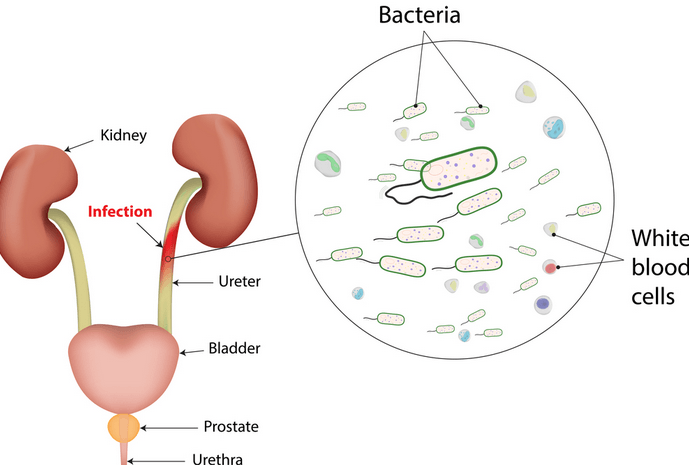
12. Ureteric Colic / Urinary Tract Infection (UTI)
While UTIs typically cause pain during urination, a severe UTI, especially if it progresses to a kidney infection (pyelonephritis), can cause flank pain that may radiate to the lower abdomen. Ureteric colic is severe pain caused by a stone in the ureter.
- Symptoms (UTI): Strong, persistent urge to urinate, burning sensation when urinating, passing frequent, small amounts of urine, cloudy urine, strong-smelling urine, pelvic pain in women (can be localized to lower right abdomen).
- Symptoms (Pyelonephritis): Fever, chills, back and side pain (flank pain, can radiate to lower right abdomen), nausea, vomiting.
- What it feels like: For a UTI, it’s often a dull ache or pressure. For pyelonephritis, the pain is more severe, often a deep, aching pain or tenderness. Ureteric colic is sudden, severe, cramping pain that comes in waves.
- Treatment: You should see a general physician. UTIs are treated with antibiotics. Kidney stones causing ureteric colic may require pain management and observation, or intervention as described in the kidney stone section.
13. Testicular Torsion (for males)
Testicular torsion is a twisting of the spermatic cord, which cuts off the blood supply to the testicle. This is a medical emergency and can cause lower abdominal pain.
- Symptoms: Sudden, severe pain in the scrotum, swelling of the scrotum, abdominal pain (can radiate to lower right abdomen), nausea, vomiting, a testicle that sits higher than usual or at an unusual angle.
- What it feels like: The pain is excruciatingly sharp and sudden in the scrotum, often radiating to the lower abdomen on the affected side.
- Treatment: This is a medical emergency. You should go to the emergency room immediately. Urgent surgery is required to untwist the spermatic cord and restore blood flow.
14. Inguinal Hernia (for males)
As mentioned earlier, inguinal hernias can cause a bulge in the groin area and discomfort. In males, this pain can sometimes be referred to the lower right abdomen or testicle.
- Symptoms: A visible bulge in the groin (often more noticeable when standing or straining), pain or discomfort in the groin, a heavy or dragging sensation, pain radiating to the testicle.
- What it feels like: A dull ache or discomfort, which may worsen with activity.
- Treatment: You should see a general physician or surgeon. Surgery is the primary treatment to repair the hernia.
15. Constipation
Constipation is a common digestive issue characterized by infrequent bowel movements or difficulty passing stools. Severe or prolonged constipation can lead to significant abdominal discomfort and pain.
- Symptoms: Infrequent bowel movements (fewer than three per week), hard or lumpy stools, straining during bowel movements, feeling of incomplete evacuation, abdominal pain and cramping, bloating.
- What it feels like: A dull, aching pain or pressure in the abdomen. If stool is backed up in the right side of the colon, the pain might be localized to the lower right abdomen. It often feels like general discomfort or fullness.
- Treatment: You should see a general physician if constipation is chronic or severe. Home treatments include increasing fiber and fluid intake, regular exercise, and over-the-counter laxatives or stool softeners.
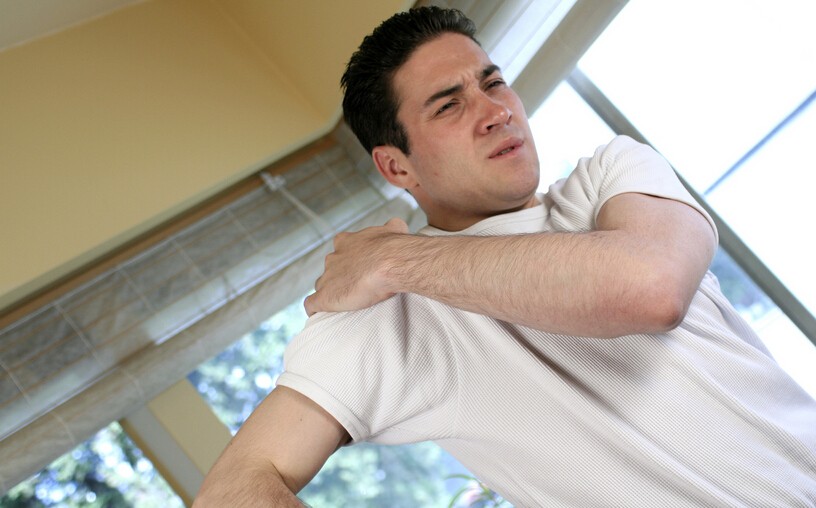
16. Muscle Strain or Injury
Sometimes, the pain in your lower right abdomen isn’t from an internal organ at all, but from a strained or injured muscle in the abdominal wall. This can happen from strenuous exercise, heavy lifting, or sudden movements.
- Symptoms: Localized pain that worsens with movement, stretching, coughing, or sneezing; tenderness to the touch in the affected area; bruising or swelling (less common but possible).
- What it feels like: A sharp or pulling pain that comes on suddenly, often with activity, or a persistent dull ache. The pain is usually superficial and can be reproduced by pressing on the affected muscle.
- Treatment: You should see a general physician or physical therapist. Treatment typically involves rest, ice, gentle stretching, over-the-counter pain relievers (NSAIDs like ibuprofen), and avoiding activities that aggravate the pain.
Treatment Approaches for Lower Right Abdominal Pain
Treatment for lower right abdominal pain is entirely dependent on the underlying cause. Once a diagnosis is established, your doctor will recommend the most appropriate course of action.
1. Medical Management
Many conditions causing lower right abdominal pain can be managed with medication:
- Antibiotics: For bacterial infections such as appendicitis (in very early stages or to prevent complications), diverticulitis, UTIs, or PID.
- Pain Relievers: Over-the-counter options like acetaminophen or ibuprofen for mild-to-moderate pain. Stronger prescription pain medications may be used for severe pain (e.g., kidney stones).
- Anti-inflammatory Drugs: For conditions like Crohn’s disease or endometriosis.
- Antispasmodics: To relieve abdominal cramping associated with IBS.
- Laxatives/Stool Softeners: For constipation.
- Hormone Therapy: For endometriosis or certain types of ovarian cysts.
- Methotrexate: For certain cases of ectopic pregnancy.
2. Surgical Intervention
Surgery is often necessary for conditions that cannot be resolved with medication or pose a significant risk:
- Appendectomy: Surgical removal of the appendix for appendicitis. This is typically a minimally invasive laparoscopic procedure.
- Hernia Repair: To fix an inguinal hernia.
- Cystectomy/Oophorectomy: Surgical removal of an ovarian cyst or the entire ovary, especially if it’s large, symptomatic, or cancerous.
- Ectopic Pregnancy Removal: Surgery to remove an ectopic pregnancy, particularly if it’s rupturing or too large for medication.
- Ovarian Detorsion: Emergency surgery to untwist an ovary in cases of ovarian torsion.
- Bowel Resection: For severe cases of Crohn’s disease or complicated diverticulitis, where a damaged section of the intestine is removed.
- Kidney Stone Removal: Procedures like ureteroscopy or percutaneous nephrolithotomy for larger kidney stones that can’t pass naturally.
- Testicular Detorsion: Emergency surgery to untwist the testicle and restore blood flow in testicular torsion.
3. Lifestyle and Dietary Changes
For chronic conditions or less severe causes, lifestyle adjustments play a significant role:
- Dietary Modifications:
- High-fiber diet: For constipation and some forms of diverticular disease.
- Low-FODMAP diet: Often recommended for IBS to identify and avoid trigger foods.
- Avoiding trigger foods: For Crohn’s disease, identifying and limiting foods that worsen symptoms.
- Increased fluid intake: Especially important for kidney stones and constipation.
- Stress Management: Techniques like yoga, meditation, and counseling can help manage conditions like IBS, which are often exacerbated by stress.
- Regular Exercise: Promotes healthy bowel function and can help with muscle strains.
- Heat Therapy: Applying a warm compress or taking a warm bath can soothe muscle pain and some types of cramping.
- Rest: Important for recovery from muscle strains and during episodes of inflammation.
When to See a Doctor?
While some causes of lower right abdominal pain are mild and resolve on their own, others require immediate medical attention. Knowing when to seek help is critical.
Seek immediate emergency medical care (call 911 or go to the nearest ER) if you experience:
- Sudden, severe pain: Especially if it wakes you up or comes on very quickly.
- Pain accompanied by fever, chills, and profuse sweating.
- Pain with persistent nausea and vomiting, especially if you can’t keep liquids down.
- Swelling and tenderness in the abdomen.
- Pain that worsens when you move or cough.
- Bloody stools or persistent diarrhea.
- Vaginal bleeding, especially if you are pregnant or could be pregnant, and experience severe pain.
- Dizziness, lightheadedness, or fainting.
- Inability to pass gas or have a bowel movement.
- Sudden, severe scrotal pain (for males).
It’s always better to err on the side of caution when it comes to abdominal pain. Self-diagnosing can be dangerous, as symptoms for different conditions can overlap.