
If you’ve ever felt that afternoon slump, experienced muscle tension after a workout, or struggled to fall asleep at night, you’ve probably wondered what might help. Many of us turn to magnesium supplements, hoping for that missing piece to feel our best.
But here’s where things get confusing: when you walk into a health store or browse online, you’re met with dozens of magnesium options. Magnesium citrate. Magnesium glycinate. Magnesium malate. Magnesium threonate. The list goes on. So how do you know which one is right for you?
Today, we’re diving deep into two of the most popular forms: magnesium citrate and magnesium glycinate. By the end of this guide, you’ll understand exactly how these two compare, what each does best, and which one might be the right choice for your unique health goals.
What is Magnesium
Magnesium is often called the “master mineral” for good reason. It’s a powerhouse, silently working behind the scenes to keep our bodies functioning optimally. From the rhythmic beating of your heart to the contraction of your muscles, and from the intricate signaling of your nerves to the delicate balance of your blood sugar, magnesium plays a pivotal role. Yet, despite its importance, many of us aren’t getting enough.
Our modern diets, often depleted of essential nutrients, combined with stress and certain medications, can contribute to magnesium deficiency. Symptoms can be wide-ranging and often subtle, making them easy to dismiss: fatigue, muscle cramps, restless legs, difficulty sleeping, anxiety, headaches, and even an irregular heartbeat.
What Makes Different Magnesium Forms Different?
Magnesium on its own is a mineral, and the body doesn’t absorb pure magnesium very well. So manufacturers bind magnesium to other compounds to improve absorption and create different effects in your body. These compounds are called chelates or salts, and they’re what distinguish one magnesium supplement from another.
The compound that magnesium is bound to determines several things: how easily your body absorbs it, where it works in your body, and what effects you’ll experience. This is why choosing between magnesium citrate and magnesium glycinate isn’t just splitting hairs—it can make a real difference in how well a supplement works for you.

Magnesium Citrate vs Glycinate: 6 Differences
Difference 1: Absorption and Bioavailability
When you take a supplement, the ultimate goal is for your body to actually use the nutrients. This is where absorption and bioavailability come into play, and it’s a significant point of divergence when comparing magnesium glycinate vs citrate.
Magnesium Glycinate: The Absorption Champion
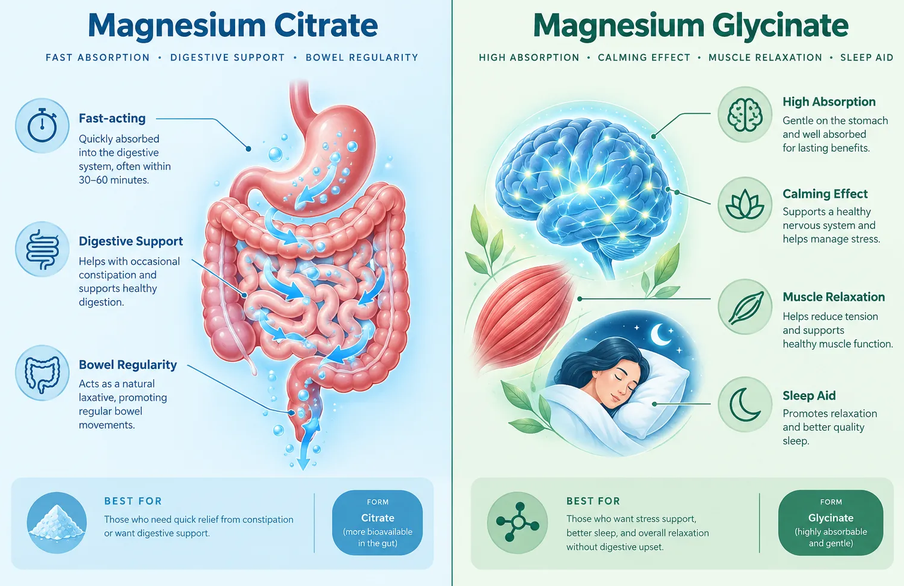
Magnesium glycinate is a chelated form of magnesium. This means that magnesium is bound to glycine, a non-essential amino acid. This unique bonding structure is what makes it so special. Glycine acts as a transporter, essentially “smuggling” the magnesium through your digestive tract without it competing with other minerals for absorption. This results in:
- High Bioavailability: Your body can readily absorb and utilize magnesium glycinate.
- Gentle on the Stomach: Because it doesn’t heavily dissociate (separate) in the stomach acids, it’s less likely to cause digestive upset, gas, or diarrhea.
- No Laxative Effect (Typically): The high absorption rate means less unabsorbed magnesium reaches the colon, thus minimizing its osmotic (water-drawing) effect.
Think of it like this: magnesium glycinate has a VIP pass into your cells, ensuring more of it gets where it needs to go without causing a fuss.
Magnesium Citrate: Good, But Different Absorption
Magnesium citrate is magnesium bound to citric acid. While it’s also considered a relatively well-absorbed form of magnesium, its absorption mechanism differs. When consumed, magnesium citrate can dissociate into magnesium ions and citrate ions in the digestive tract.
- Decent Bioavailability: It is better absorbed than some other forms (like magnesium oxide), but generally not as efficiently as magnesium glycinate.
- Osmotic Effect: The citrate portion of the molecule, and unabsorbed magnesium, can draw water into the intestines. This is precisely why it’s so effective as a laxative, which we’ll discuss more shortly.
- Variable Absorption: For some individuals, the laxative effect can occur before optimal magnesium absorption takes place, meaning less magnesium might ultimately get into the bloodstream compared to glycinate, especially at higher doses.
So, while magnesium citrate does deliver magnesium, its journey through your system often involves a pit stop in the digestive system that influences its overall absorption and utility.
Difference 2: Primary Uses and Benefits
The distinct ways magnesium glycinate vs citrate interact with your body lead to different primary uses. Understanding these can help you pinpoint which form is best suited for your specific health goals.
Magnesium Glycinate: For General Wellness, Relaxation, and Sleep
Magnesium glycinate shines as an all-around magnesium supplement for those looking to address a general deficiency or reap magnesium’s broader benefits without digestive side effects. Its key benefits include:
- Addressing Magnesium Deficiency: As a highly bioavailable form, it’s excellent for effectively raising magnesium levels in the body.
- Promoting Relaxation: Glycine, the amino acid bound to magnesium, is an inhibitory neurotransmitter. It can help calm the brain, reduce nerve excitability, and promote a sense of tranquility. This makes it a popular choice for:
- Reducing anxiety and stress
- Improving sleep quality and duration
- Alleviating restless legs syndrome
- Muscle Support: It helps with muscle relaxation, reducing cramps and spasms, making it beneficial for athletes or those experiencing muscle tension.
- Bone Health: Like all forms of magnesium, it contributes to bone mineral density.
- Cardiovascular Health: Supports healthy blood pressure and heart rhythm.
If your aim is to generally boost your magnesium intake, improve sleep, calm your nervous system, or support muscle function without worrying about frequent bathroom trips, magnesium glycinate is likely your go-to.
Magnesium Citrate: The Bowel Regularity Buddy
While magnesium citrate does provide magnesium to the body, its most well-known and often sought-after benefit is its effect on the digestive system.
- Constipation Relief: This is magnesium citrate’s star role. It works by drawing water into the intestines, softening stool, and stimulating bowel movements. It’s often recommended by doctors for occasional constipation or as a bowel prep before medical procedures.
- Mild Magnesium Supplementation (with caution): For individuals who tolerate its digestive effects, it can contribute to overall magnesium intake. However, for those specifically seeking to raise systemic magnesium levels without the laxative effect, glycinate or other forms might be preferred.
It’s important to differentiate: if you are only looking for a laxative, magnesium citrate is highly effective. If you’re looking to address a magnesium deficiency and gently support bowel movements, it might be a consideration, but its primary action is in the gut.
Difference 3: Digestive Impact and Side Effects
This is arguably the most significant practical difference between magnesium glycinate vs citrate and often the deciding factor for many individuals.
Magnesium Glycinate: The Gentle Giant
Due to its excellent absorption and the chelated bond with glycine, magnesium glycinate is remarkably gentle on the digestive system.
- Minimal Side Effects: It is very well-tolerated, even at higher doses.
- No Laxative Effect: Because most of the magnesium is absorbed before it reaches the large intestine, it rarely causes diarrhea or loose stools. This makes it ideal for long-term supplementation without digestive disruption.
- Less Gastric Distress: You’re unlikely to experience stomach cramps, gas, or nausea with magnesium glycinate.
This makes it an excellent choice for individuals with sensitive stomachs or those who have experienced digestive issues with other forms of magnesium.
Magnesium Citrate: The Evacuation Expert
Magnesium citrate is known for its potent laxative effect.
- Laxative Effect (Common): The primary side effect, and often the intended effect, is loose stools or diarrhea. This happens because unabsorbed magnesium and the citrate molecule pull water into the intestines, increasing stool volume and stimulating bowel contractions.
- Dosage Dependent: The severity of the laxative effect is highly dependent on the dose. Lower doses might just soften stools, while higher doses can lead to significant bowel movements.
- Potential for Cramps/Bloating: Some individuals might experience abdominal cramping or bloating as their digestive system responds.
| Feature | Magnesium Glycinate | Magnesium Citrate |
|---|---|---|
| Digestive Impact | Very gentle, minimal side effects | Known laxative, can cause diarrhea/cramps |
| Laxative Effect | Rarely | Often, especially at higher doses |
| Stomach Sensitivity | Excellent for sensitive stomachs | Not ideal for sensitive stomachs due to laxative action |
| Primary Use | General magnesium deficiency, relaxation, sleep | Constipation relief, bowel preparation |
If you’re seeking to avoid any potential digestive upset, magnesium glycinate is the clear winner in the magnesium citrate vs glycinate debate.
Difference 4: Impact on Sleep and Relaxation
Beyond general magnesium benefits, the specific forms can have unique influences on your nervous system, particularly concerning sleep and relaxation. This is where the “glycine” in magnesium glycinate truly shines.
Magnesium Glycinate: The Calming Compound
The glycine molecule in magnesium glycinate plays a significant role in its calming properties. Glycine is an inhibitory neurotransmitter, meaning it helps to quiet the brain and promote a sense of calm.
- Reduced Anxiety and Stress: By acting on the brain’s receptors, glycine can help reduce feelings of anxiety and promote mental tranquility. This makes magnesium glycinate a popular choice for those dealing with everyday stress.
- Improved Sleep Quality: It can help you fall asleep faster, stay asleep longer, and achieve deeper, more restorative sleep by:
- Lowering core body temperature, signaling the body it’s time to sleep.
- Calming an overactive mind.
- Easing restless legs syndrome, which can disrupt sleep.
- Muscle Relaxation: The magnesium component itself is crucial for muscle relaxation, helping to alleviate tension that can interfere with sleep.
Many individuals report feeling a noticeable difference in their ability to wind down and sleep better when taking magnesium glycinate consistently.
Magnesium Citrate: Less Direct Impact on Calmness
While magnesium itself has calming properties, the citrate form doesn’t offer the added relaxation benefits that glycine brings.
- General Magnesium Benefits: Magnesium citrate will contribute to your overall magnesium levels, which can indirectly support relaxation over time. A sufficient magnesium status is vital for nervous system health.
- No Specific Glycine Effect: Because it lacks the glycine molecule, it doesn’t provide the direct inhibitory neurotransmitter effect that makes magnesium glycinate so effective for sleep and anxiety.
- Potential Disruption: For some, the laxative effect, especially if taken too close to bedtime, could even disrupt sleep rather than enhance it.
Therefore, if your primary goal is to improve sleep quality, reduce anxiety, or promote a sense of calm, magnesium glycinate is generally considered superior to magnesium citrate in the magnesium citrate vs glycinate comparison.
Difference 5: Potential Side Effects and Contraindications
All supplements can have side effects, and magnesium is no exception. Knowing what to expect from magnesium glycinate vs citrate can help you make an informed decision and speak to your doctor if needed.
Magnesium Glycinate: Generally Well-Tolerated
As mentioned, magnesium glycinate is renowned for its excellent tolerability.
- Minimal Side Effects: Most people experience no side effects at recommended doses.
- Rare Digestive Upset: Very occasionally, some individuals might experience mild nausea or stomach discomfort, but this is far less common than with other forms of magnesium.
- Sleepiness: Because of its calming properties, taking very high doses during the day might lead to mild drowsiness in some sensitive individuals. It’s generally recommended for evening use if sleep is a goal.
- Contraindications: As with any magnesium supplement, it should be used with caution in individuals with severe kidney disease, as magnesium excretion can be impaired, leading to hypermagnesemia (too much magnesium). Always consult a doctor if you have kidney issues.
Magnesium Citrate: The Laxative Effect is Key
The primary side effect of magnesium citrate is its laxative action.
- Diarrhea/Loose Stools: This is the most common and often intended side effect.
- Abdominal Cramps: Can occur, especially with higher doses.
- Bloating and Gas: Some individuals may experience these symptoms.
- Dehydration/Electrolyte Imbalance: Excessive or prolonged use, especially at high doses, can lead to dehydration and imbalances in electrolytes (like potassium) due to fluid loss. This is a serious concern and why magnesium citrate should not be used as a daily laxative without medical supervision.
- Contraindications:
- Kidney Disease: Similar to glycinate, individuals with impaired kidney function should avoid magnesium citrate or use it only under strict medical guidance.
- Bowel Obstruction/Appendicitis: Should not be used in cases of suspected bowel obstruction, appendicitis, or severe abdominal pain, as it can worsen these conditions.
- Heart Block: Caution is advised for those with certain heart conditions.
- Medication Interactions: Magnesium can interact with certain medications, including antibiotics (tetracyclines and quinolones), diuretics, and bisphosphonates. Always discuss magnesium supplementation with your doctor if you are on medication.
It’s crucial to be aware of these potential side effects and contraindications, especially if you’re considering magnesium citrate for regular use. For most individuals seeking to simply boost their magnesium intake for general health, the gentler profile of magnesium glycinate is often preferred.
Difference 6: Cost and Availability
Practical considerations like price and how easily you can find a supplement also play a role in your decision.
Magnesium Glycinate: Readily Available, Often Premium Priced
- Availability: Magnesium glycinate is widely available at health food stores, pharmacies, and online retailers. It’s a very popular form, so you shouldn’t have trouble finding it.
- Cost: Generally, magnesium glycinate tends to be slightly more expensive per serving than magnesium citrate. This is due to the chelated form, which involves a more complex manufacturing process to bind the magnesium to glycine. However, the investment is often considered worthwhile due to its superior absorption and lack of digestive side effects.
Magnesium Citrate: Widely Available and Budget-Friendly
- Availability: Magnesium citrate is perhaps one of the most readily available forms of magnesium, particularly in liquid form as an over-the-counter laxative. You can find it in virtually any pharmacy, supermarket, or online.
- Cost: Magnesium citrate is typically more affordable than magnesium glycinate, especially the liquid formulations sold as laxatives. For those on a tight budget who primarily need a laxative, it’s a very cost-effective option.
If cost is your absolute primary concern and your main goal is occasional constipation relief, magnesium citrate offers a budget-friendly solution. However, if you’re looking for a daily supplement to address a deficiency and support overall health without digestive issues, the slightly higher cost of magnesium glycinate is often justified by its benefits.
Dosage and Safety Considerations
No matter which form of magnesium you choose, understanding proper dosage and potential side effects is paramount. While magnesium is generally safe, taking too much can lead to adverse effects.
Dosage for Magnesium Citrate
For constipation, doses can range from 200 mg to 600 mg of elemental magnesium, depending on the severity and individual response. Always start with a lower dose to assess tolerance.
For general supplementation, doses often fall between 100 mg and 300 mg daily, usually taken with food to minimize stomach upset. Because of its higher elemental magnesium content per serving, it’s easier to reach higher magnesium levels with fewer capsules.
Dosage for Magnesium Glycinate
For systemic benefits like sleep, anxiety, or muscle relaxation, typical doses range from 100 mg to 400 mg of elemental magnesium daily. Due to its lower elemental magnesium percentage, you might need to take 2-4 capsules (depending on the product’s concentration) to reach 200-300 mg.
It’s often recommended to split the dose throughout the day or take it before bedtime for its calming effects. Magnesium glycinate is usually well-tolerated, even on an empty stomach.
Timing and Additional Considerations
When to Take Them: Both magnesium supplements are generally best taken with food, though they can be taken on an empty stomach if that’s more convenient.
Interactions: Magnesium can interact with certain medications, particularly antibiotics and bisphosphonates (used for bone health). If you’re on any regular medications, it’s worth checking with your healthcare provider before starting supplementation.
Quality Matters: Not all supplements are created equal. Look for third-party tested products from reputable manufacturers. This ensures you’re getting what the label says you’re getting, free from contaminants.
Consistency is Key: Unlike some supplements where you might see immediate effects, magnesium works best with consistent use over time. Give it at least 2-4 weeks of daily use before deciding if it’s working for you.

Magnesium Glycinate vs Citrate: Choosing the Right One for You
By now, you should have a clear understanding of the fundamental differences between magnesium glycinate vs citrate. The choice ultimately boils down to your individual needs and health goals.
When to Choose Magnesium Glycinate:
- General Magnesium Deficiency: You want to effectively raise your magnesium levels without digestive upset.
- Sleep Issues: You struggle with falling asleep, staying asleep, or restless legs.
- Anxiety and Stress: You’re looking for a natural way to promote calmness and reduce nervous tension.
- Muscle Cramps/Spasms: You experience frequent muscle discomfort.
- Sensitive Stomach: You’ve had issues with other magnesium supplements causing diarrhea or stomach upset.
- Long-Term Daily Supplementation: You plan to take magnesium regularly for its systemic benefits.
When to Choose Magnesium Citrate:
- Constipation Relief: Your primary goal is to alleviate occasional constipation.
- Bowel Preparation: As directed by a healthcare professional for specific medical procedures.
- Cost is a Major Factor: You’re looking for the most affordable magnesium option, recognizing its potential laxative effect.
- If you need a laxative effect: It’s important to remember that this is its primary medical use.
The Bottom Line
Both magnesium citrate and magnesium glycinate are excellent forms of magnesium supplementation. Neither is inherently “better”—they’re just different, and the right choice depends on your specific health goals and individual circumstances.
Regardless of which form you choose, remember that magnesium supplementation works best as part of a broader wellness approach. Continue eating magnesium-rich foods like leafy greens, nuts, seeds, and whole grains.
Manage stress through meditation or exercise. Get adequate sleep. These foundational health practices, combined with the right magnesium supplement, can make a real difference in how you feel.


