If you’ve ever wondered about the hidden potential of onion oil, you’re not alone. While onions are kitchen staples, onion oil—a concentrated extraction from this humble bulb—represents a powerhouse of nutrients and therapeutic compounds. From ancient Ayurvedic medicine to modern dermatology, onion oil has earned recognition for promoting hair growth, improving scalp health, and supporting skin vitality.
But what exactly makes onion oil so special? How can you harness its benefits safely and effectively? And how can you create your own potent onion oil at home? This article will explore everything you need to know about onion oil, from its nutritional composition to practical applications for your health and beauty routines.
What is Onion Oil?
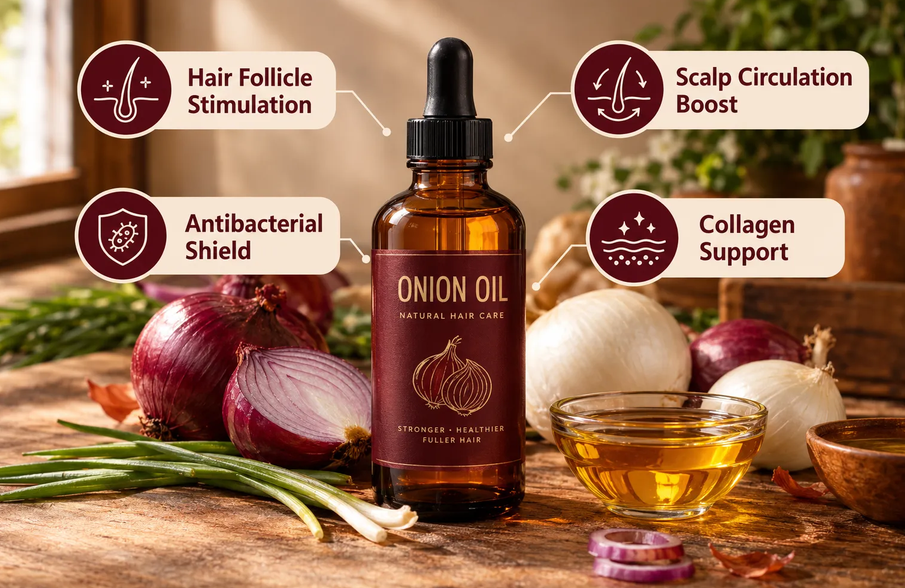
Onion oil is a concentrated extract derived from onions (Allium cepa), a nutrient-dense bulb belonging to the Allium family. The oil is produced through infusion methods where fresh onion is mixed with carrier oils or through distillation processes that extract essential volatile compounds.
For centuries, onion oil has been utilized in traditional medicine systems, particularly Ayurveda and Traditional Chinese Medicine, for treating hair and scalp conditions. Modern scientific research validates many traditional uses, demonstrating that onion oil contains powerful sulfur compounds, antioxidants, and enzymes that promote scalp health, stimulate hair growth, reduce inflammation, and support overall wellness.
Onion oil is particularly renowned for addressing hair loss, promoting hair regrowth, treating dandruff, and improving scalp circulation. The oil’s potency means it’s typically used diluted with carrier oils like coconut, jojoba, or sesame oil for topical application.
Nutrition and Active Compounds of Onion Oil
While onion oil is not consumed as food in its concentrated form, it contains numerous bioactive compounds responsible for its therapeutic benefits.
| Compound/Nutrient | Properties and Benefits |
|---|---|
| Sulfur Compounds (Thiosulfates) | Antifungal, antibacterial, promotes collagen synthesis |
| Quercetin | Powerful antioxidant, anti-inflammatory, antihistamine |
| Vitamin C | Boosts immunity, supports collagen production, antioxidant |
| Selenium | Strengthens hair follicles, supports skin elasticity |
| Vitamin B6 | Supports protein synthesis, hair follicle health |
| Folate | Supports cell division and growth |
| Manganese | Supports skin health, collagen formation |
| Polyphenols | Antioxidant protection against oxidative stress |
| Enzymes | Promote nutrient absorption and cellular repair |
| Organic Compounds | Support scalp circulation and follicle stimulation |
These compounds work together to create onion oil’s remarkable therapeutic profile, making it effective for diverse wellness applications.

18 Proven Benefits of Onion Oil
Research-backed and traditionally validated, here are eighteen significant benefits of onion oil:
1. Stimulates Hair Growth
This is the headline benefit, and it’s earned. A well-cited 2002 study published in the Journal of Dermatology found that 87% of participants using onion juice for alopecia areata experienced significant hair regrowth within six weeks, compared to just 13% in the control group. The sulfur in onion oil boosts keratin production and improves blood circulation to dormant follicles.
2. Reduces Hair Loss
Onion oil is believed to inhibit the enzyme 5-alpha reductase, which converts testosterone into DHT, the hormone most linked to pattern baldness. By lowering DHT activity at the scalp level, regular onion oil massage may slow follicle miniaturization over time.
3. Fights Scalp Infections
Dandruff, seborrheic dermatitis, and fungal infections thrive in an imbalanced scalp environment. The thiosulfinates and sulfenic acids in onion oil have demonstrated antifungal and antibacterial activity in laboratory studies, making it a natural option for keeping the scalp microbiome in check.
4. Adds Shine and Strength to Hair
Sulfur is a core building block of the disulfide bonds in keratin, the protein your hair is made of. Regular application of onion oil can reinforce these bonds, reducing breakage and giving strands a noticeably smoother, shinier appearance within a few weeks.
5. Improves Scalp Circulation
Massaging onion oil into the scalp does double duty: the physical massage stimulates blood flow, and the quercetin in the oil acts as a vasodilator, helping capillaries deliver more oxygen and nutrients to hair follicles. Better circulation = healthier, faster-growing hair.
6. Moisturizes and Nourishes Skin
When diluted in a carrier oil, onion oil can be a surprisingly effective skin moisturizer. Its vitamin C content supports collagen synthesis, while its antioxidant flavonoids help maintain skin elasticity. Some users report softer, more supple skin after consistent use.
7. Reduces Skin Inflammation
Quercetin, one of the most abundant compounds in onion oil, is a well-documented anti-inflammatory agent. Research shows it can suppress pro-inflammatory cytokines like IL-6 and TNF-α, which makes onion oil potentially useful for calming conditions like eczema, psoriasis, and general skin redness.
8. Powerful Antioxidant Protection
Free radicals accelerate aging, damage DNA, and contribute to chronic disease. Onion oil’s rich flavonoid and polyphenol content gives it strong free-radical scavenging activity. Think of it as a natural shield for both skin cells and internal tissues when consumed as part of a balanced diet.
9. Supports Oral Health
This one surprises most people. The antibacterial compounds in onion oil, particularly thiosulfinates, have shown activity against Streptococcus mutans and other bacteria linked to tooth decay and gum disease. Some traditional medicine practitioners use diluted onion preparations as a mouth rinse, though more clinical research is needed here.
10. May Support Heart Health
Quercetin has been studied for its ability to lower LDL cholesterol oxidation and reduce blood pressure. A 2016 meta-analysis in the British Journal of Nutrition found that quercetin supplementation significantly reduced systolic blood pressure in hypertensive patients. While most of this research involves quercetin supplements, onion oil is a natural dietary source of the compound.
11. Accelerates Wound Healing
Traditional medicine has used onion preparations on wounds for centuries, and science is starting to validate why. Onion extract has been shown to reduce scar formation and speed up epithelial cell migration, the process by which new skin covers a wound. Onion oil’s anti-inflammatory and antimicrobial properties work together here.
12. Eases Joint Pain and Inflammation
The anti-inflammatory properties of onion oil extend beyond the skin. When used in topical massage blends, the sulfur compounds and quercetin may help reduce localized inflammation in joints and muscles. Athletes and people with mild arthritis sometimes use it as a complementary massage oil alongside conventional treatment.
13. May Support Brain Health
Quercetin has demonstrated neuroprotective effects in preclinical studies, helping protect neurons from oxidative stress and inflammation, two key drivers of cognitive decline. While human trials are still limited, the antioxidant load in onion oil makes it a promising area of ongoing research.
14. Natural Antimicrobial Agent
Beyond the scalp, onion oil’s organosulfur compounds have shown broad-spectrum antimicrobial activity against bacteria like E. coli, Staphylococcus aureus, and even some antibiotic-resistant strains in lab settings. This makes it a useful ingredient in natural skincare formulations targeting acne and surface infections.
15. May Help Regulate Blood Sugar
Several animal studies have found that onion extracts can lower blood glucose levels by stimulating insulin secretion and improving insulin sensitivity. The sulfur compound dipropyl disulfide appears to play a key role. Human research is still catching up, but the preliminary data is encouraging for people managing metabolic health.
16. Supports Respiratory Health (Traditionally)
In Ayurvedic and folk medicine traditions, warm onion oil is sometimes applied to the chest to ease congestion and respiratory discomfort. The volatile sulfur compounds may have mild expectorant properties, though this benefit is largely traditional and needs more clinical validation.
17. Boosts Immunity
Onion oil contains vitamin C, quercetin, and zinc (when derived from whole onion infusions), all of which play documented roles in immune function. Quercetin in particular has been studied for its ability to inhibit viral replication and modulate immune response, making onion oil a useful addition to a wellness routine during cold and flu season.
18. May Reduce Hyperpigmentation
Some early research and anecdotal evidence suggest that onion extract can help fade dark spots and post-inflammatory hyperpigmentation by inhibiting tyrosinase, the enzyme responsible for melanin production. Commercial scar gels like Mederma already use onion extract as an active ingredient, lending credibility to this benefit.

Side Effects of Onion Oil
While onion oil offers numerous benefits, it’s essential to understand potential side effects and contraindications:
1. Scalp Irritation and Burning Sensation
Concentrated onion oil can cause scalp irritation, burning, redness, or stinging in individuals with sensitive scalp conditions, requiring dilution with carrier oils.
2. Allergic Reactions
Individuals allergic to garlic, leeks, or other Allium family members may develop allergic reactions including itching, rashes, hives, or throat swelling.
3. Strong Odor and Lingering Smell
Onion oil carries a potent aroma that can linger on hair and skin for extended periods, causing social discomfort.
4. Eye Irritation
Accidental contact with eyes causes significant irritation, tearing, redness, and discomfort, requiring immediate flushing with water.
5. Contact Dermatitis in Sensitive Individuals
Concentrated onion oil can trigger contact dermatitis in individuals with highly sensitive skin, causing inflammation, redness, or blistering.
6. Nausea or Digestive Upset if Ingested
Accidental ingestion can cause nausea, vomiting, stomach pain, and digestive discomfort without proper dilution or guidance.
7. Photosensitivity Reactions
Some individuals may experience photosensitivity reactions when applying onion oil topically and exposing areas to direct sunlight.
8. Interactions with Blood-Thinning Medications
Quercetin content may have mild anticoagulant properties, potentially interacting with blood-thinning medications like warfarin or aspirin.

How to Use Onion Oil for Hair and Skin
How to Perform a Patch Test
- Apply a small amount of onion oil to a discreet area of your skin, such as behind your ear or on your inner forearm.
- Leave it on for 24-48 hours.
- Check for any signs of redness, itching, burning, or swelling. If irritation occurs, wash it off immediately and discontinue use. If there is no reaction, it’s likely safe for you to use.
For Hair Growth and Scalp Health
Frequency: 2-3 times a week.
Method:
- Preparation: Slightly warm the onion oil (you can place the bottle in a bowl of warm water for a few minutes; never microwave it directly).
- Application: Section your hair and apply the oil directly to your scalp using your fingertips.
- Massage: Gently massage your scalp in circular motions for 5-10 minutes. This helps the oil penetrate and stimulates blood circulation.
- Distribution: You can also apply a small amount to the length of your hair, especially the ends, for conditioning.
- Leave-in Time: Leave the oil on for at least 30 minutes, or preferably overnight for deeper conditioning. If leaving overnight, cover your pillow with a towel.
- Rinse: Wash your hair thoroughly with a mild shampoo. You might need to shampoo twice to completely remove the onion smell.
- Condition: Follow with your regular conditioner.
Tip: To help mask the onion smell, you can add a few drops of essential oils like rosemary, lavender, or peppermint oil to your onion oil before application.
For Skin Issues (Acne, Dark Spots, Anti-aging)
Frequency: 2-3 times a week, or as needed for spot treatment.
Method:
- Cleanse: Start with a clean, dry face.
- Application (Spot Treatment): For acne or dark spots, dab a small amount of onion oil directly onto the affected area using a cotton swab.
- Application (Overall Glow): For general anti-aging or skin radiance, mix a few drops of onion oil with your regular moisturizer or a lighter carrier oil (like jojoba or rosehip oil) and apply evenly to your face and neck.
- Leave-in Time: Allow it to absorb. If using as a spot treatment, you can leave it on overnight. If applied to the whole face, allow it to absorb for 30 minutes to an hour, then rinse if desired, or leave on if mixed with a moisturizer.
- Patch Test is Crucial: Always remember the patch test for skin applications, as facial skin can be more sensitive.
How Much Onion Oil Can You Use Per Day?
For topical scalp and hair applications, use four to twelve drops diluted in carrier oil, applied two to four times weekly. This frequency and amount prove effective for most people without causing irritation or excessive buildup.
For skin applications, limit to one to two drops diluted in carrier oil or moisturizer, applied once or twice daily to affected areas. This conservative approach prevents irritation in facial skin.
For systemic absorption through bath therapy, add five to six drops mixed with carrier oil or bath salts once to twice weekly. This frequency provides benefits without overwhelming the body.
Onion Oil Dosage and Best Practices
| Usage Purpose | Safe Dosage | Frequency |
|---|---|---|
| Hair growth | 5-10 drops diluted | 2-4 times weekly |
| Dandruff treatment | 4-6 drops diluted | 2-3 times weekly |
| Premature graying | 5-8 drops diluted | 2-3 times weekly |
| Skin care | 1-2 drops diluted | 1-2 times daily |
| Nail health | 1 drop diluted | Daily or 4-5 times weekly |
| Bath therapy | 5-6 drops in bath | 1-2 times weekly |
| Scalp massage | 5-8 drops diluted | 1-2 times weekly |
Important Note: These dosages apply to diluted preparations. Never exceed recommended amounts, particularly for undiluted or concentrated onion oil applications.
Best Time to Use Onion Oil
- For hair growth: Evening application before bed or on weekends allows extended contact time and minimizes odor interference with daily activities.
- For dandruff treatment: Evening or before shower allows thorough treatment and easier shampooing afterward.
- For skin care: Morning or evening applications work equally well; choose times that fit your skincare routine.
- For scalp massage: Evening or weekend mornings when you have time for thorough massage and relaxation benefits.
- For bath therapy: Evening use promotes relaxation and sleep while allowing overnight absorption benefits.
- For concentration support: Morning application provides alertness benefits throughout the day.
Precautions and Interactions
Essential precautions ensure safe onion oil use:
- Never apply undiluted onion oil directly to scalp or skin, as concentrated compounds can cause severe irritation, burning, or dermatitis.
- Always conduct patch testing on a small, inconspicuous area before widespread application. Wait twenty-four hours to ensure no adverse reactions occur.
- Avoid contact with eyes, mouth, nose, and open wounds during application and while oil remains on skin or scalp.
- Discontinue use immediately if you experience severe itching, burning, rashes, swelling, or other allergic reactions. Rinse affected areas thoroughly with cool water.
- If you take blood-thinning medications like warfarin or aspirin, consult your healthcare provider before using onion oil regularly, as potential interactions may occur.
- Pregnant women should consult healthcare providers before using onion oil, as safety during pregnancy remains insufficiently studied.
- Parents should consult pediatricians before applying onion oil to young children, particularly infants under two years old.
- If onion oil accidentally enters eyes, immediately flush with large amounts of cool water for at least fifteen minutes and seek medical attention if irritation persists.
How to Make Onion Oil at Home?
Method 1: Infusion Method (Recommended)
Ingredients:
- 5-6 fresh medium onions
- 2 cups carrier oil (coconut, sesame, or jojoba)
- Glass jar with tight-fitting lid
- Cheesecloth or fine strainer
Instructions:
Wash and dry onions thoroughly. Cut into thin slices, removing papery outer skin. Place sliced onions in the glass jar, filling approximately one-third full. Pour carrier oil until onions are completely submerged.
Seal the jar tightly and place it in a warm location away from direct sunlight for 2-3 weeks. Shake thoroughly every 2-3 days.
After three weeks, strain through cheesecloth into a clean bowl, pressing onion pieces gently to extract remaining oil. Transfer filtered oil into dark glass bottles and store in a cool, dark location. This homemade onion oil keeps for 3-6 months.
Method 2: Heat-Infusion Method (Faster)
Ingredients:
- 3-4 fresh onions, finely chopped
- 2 cups carrier oil
- Double boiler
- Thermometer
Instructions:
Place finely chopped onions in the double boiler top and pour carrier oil over them. Heat gently, maintaining 140-160°F (60-70°C) for 1-2 hours, stirring occasionally.
Allow the mixture to cool completely before straining through cheesecloth. Transfer cooled oil into dark glass bottles. Heat-infused onion oil is ready for immediate use and keeps for 4-8 months.
FAQ’s
Can I apply onion oil directly to my scalp?
No. Always dilute with carrier oils in a 1:2 to 1:4 ratio before application to prevent severe irritation and dermatitis.
How long does it take to see results?
Most users notice initial improvements within 4-6 weeks. Visible hair growth typically becomes apparent within 8-12 weeks of consistent use.
Can I use onion oil on my face?
Yes, when properly diluted. Always perform patch testing first, as facial skin is more sensitive than scalp. Use 1 drop in 1 tablespoon of facial moisturizer.
Does onion oil reduce premature graying?
Research suggests it may slow graying by protecting hair follicles from oxidative damage. It won’t reverse existing gray hair but may prevent progression.
How often should I use it?
Use 2-4 times weekly for consistent results. More frequent application isn’t necessarily more effective.
Can onion oil interact with medications?
Quercetin may have mild anticoagulant properties. If you take warfarin or aspirin, consult your healthcare provider.
Is homemade onion oil as effective as commercial versions?
Yes, properly prepared homemade onion oil is highly effective, with advantages of known ingredients and fresher preparation.
Can pregnant women use it?
Pregnant women should avoid using onion oil without explicit medical approval and should consult their obstetrician first.
What carrier oils work best?
Coconut oil, sesame oil, jojoba oil, and argan oil all work well, each offering additional benefits.
Why does onion oil smell so strong?
The pungent aroma comes from sulfur compounds responsible for many therapeutic benefits. The smell typically fades within hours to days.
Can onion oil cure baldness?
Onion oil effectively promotes hair growth and reduces hair loss, particularly for androgenetic alopecia, but it’s not a complete cure for severe baldness.
Is it safe for children?
Generally safe for children over two years when properly diluted. Always consult pediatricians before use.
Can I mix it with other oils?
Yes, onion oil combines well with rosemary oil, peppermint oil, or cedarwood oil for enhanced effects when properly diluted.
Does it cause permanent staining?
Onion oil can temporarily stain light-colored clothing or hair with a yellowish tint but typically washes out with regular laundering or shampooing.
Final Thoughts
Onion oil represents a time-tested, science-validated natural remedy offering remarkable benefits for hair health, scalp vitality, skin rejuvenation, and overall wellness.
However, you should use it correctly—always diluted, consistently applied, and with awareness of individual sensitivities—onion oil becomes a powerful addition to comprehensive wellness and beauty routines.
Results require patience and consistency; expect progressive improvements over weeks and months rather than immediate dramatic transformations. Combined with healthy lifestyle practices, proper nutrition, stress management, and adequate sleep, onion oil becomes part of a holistic approach to optimal health and natural beauty.