So you’ve decided to start strength training. Maybe you’re looking to feel stronger in your everyday life, want to build muscle, or simply need a change from your regular workout routine. Whatever brought you here, we completely understand—that first step into the gym (or even your home) can feel intimidating. The good news? Strength training isn’t some exclusive club reserved for fitness enthusiasts. It’s for anyone willing to give it a genuine try.
In this guide, we will explore 16 of the best strength training exercises that actually work, plus practical advice on how to get started without the confusion or overwhelm.
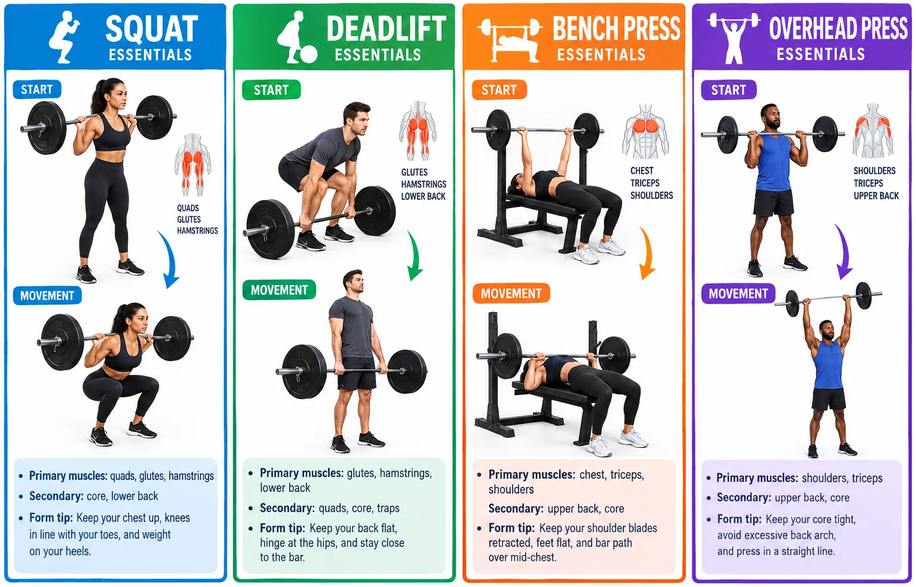
Why Strength Training Actually Matters
Strength training isn’t just about looking good—though that’s a nice bonus. When you consistently work your muscles, you’re investing in your future. You’re building stronger bones, improving your metabolism, enhancing your balance, and boosting your mental health. Studies show that people who do strength training regularly report better sleep, reduced anxiety, and improved confidence.
Think about it this way: every decade after 30, people lose roughly 3-5% of their muscle mass if they’re not actively maintaining it. That’s not inevitable—it’s preventable. I’ve seen countless people discover that strength training transformed not just their bodies, but their entire outlook on what they’re capable of achieving.
A 55-year-old woman who thought she’d be sedentary forever suddenly realizes she can carry her grandkids for hours without fatigue. A 40-year-old man who felt constantly tired finds his energy skyrocketing after weeks of consistent training.
This isn’t hype. This is real, measurable change.
Understanding the Basics Before You Start
Let me be honest with you: jumping into a complex routine is one of the fastest ways to quit. Instead, let’s cover the fundamentals so you feel confident from day one.
What exactly is strength training?
It’s any exercise where your muscles work against resistance—whether that’s dumbbells, barbells, resistance bands, or even your own bodyweight. The resistance forces your muscles to adapt and grow stronger. When you create this tension, your body responds by building more muscle fibers and making existing ones stronger. It’s adaptation in action.
How much weight should you use?
This is the question I get asked most. The answer is simpler than you think: choose a weight that challenges you for about 8-12 repetitions. By the last rep, your muscles should feel tired, but you should still be able to maintain good form. If you’re breezing through 12 reps, go heavier. If you can’t complete 8 reps with proper technique, go lighter. This sweet spot is where real strength gains happen.
How often should you train?
For beginners, 2-3 sessions per week is ideal. This gives your muscles time to recover while building consistency. Recovery is where the actual growth happens, so don’t skip this part. Your muscles don’t grow in the gym—they grow when you’re resting, eating well, and sleeping soundly.
Do I need a gym membership?
Absolutely not. Many of these exercises can be done at home with minimal equipment. Dumbbells, resistance bands, and your bodyweight can take you incredibly far.

16 Best Strength Training Exercises for Beginners
Upper Body Exercises
1. Push-Ups
Push-ups are the ultimate full-body exercise disguised as an upper body move. They work your chest, shoulders, triceps, and core simultaneously. There’s a reason soldiers and athletes use them—they’re brutally effective.
How to do it: Start on your hands and knees (or feet if you’re more advanced). Your hands should be slightly wider than shoulder-width apart. Lower your body until your chest nearly touches the ground, keeping your elbows at about a 45-degree angle from your body. Push back up to the starting position. That’s one rep.
Pro tip: If full push-ups feel too challenging, start on your knees. There’s zero shame in this—it’s smart training. As you get stronger, progress to your toes. Once those feel easy, try diamond push-ups or archer push-ups for variation.
2. Dumbbell Bench Press
This exercise mimics the classic barbell bench press but with added benefit for beginners: the dumbbells allow a greater range of motion and let each arm work independently. This independence is crucial because it exposes strength imbalances you wouldn’t notice with a barbell.
How to do it: Lie on a flat bench (or even your couch for home workouts) with dumbbells held at chest height, elbows bent at about 90 degrees. Press them upward until your arms are nearly fully extended, then lower them back down with control. Avoid locking your elbows at the top.
3. Bent-Over Dumbbell Rows
If push-ups are the front, rows are the back. They’re essential for balanced development and posture. In our world of desk jobs and phone scrolling, back strength has never been more important.
How to do it: Stand with feet hip-width apart, holding dumbbells at your sides. Bend forward at the hips until your torso is nearly parallel to the ground. Pull the dumbbells toward your ribcage, squeezing your shoulder blades together. Lower them back down with control. You should feel this primarily in your back, not your arms.
4. Overhead Press
The overhead press builds shoulder strength and stability. It’s also incredibly functional—think of how often you reach overhead in daily life, whether putting things on high shelves or simply reaching for something.
How to do it: Stand with feet shoulder-width apart, holding dumbbells at shoulder height. Press them overhead until your arms are fully extended but not locked. Lower them back to shoulder height in a controlled manner.
5. Pull-Ups or Assisted Pull-Ups
Pull-ups are the gold standard for upper back and bicep strength. Don’t worry if you can’t do them yet—assisted machines and resistance bands are your friends. There’s a progression path to full pull-ups, and it all starts somewhere.
How to do it: Hang from a bar with hands slightly wider than shoulder-width. Pull yourself up until your chin clears the bar. Lower yourself with control. If you can’t do a full pull-up, use an assisted pull-up machine or loop a resistance band around the bar and place your feet in it for assistance.
6. Dumbbell Bicep Curls
Bicep curls are the classic arm exercise for a reason—they work, they’re simple, and they make you feel strong. There’s something satisfying about seeing those biceps pop after a few weeks of training.
How to do it: Stand holding dumbbells at your sides with palms facing forward. Curl them up toward your shoulders, keeping your elbows stationary at your sides. Lower them back down slowly. Resist the urge to swing the weight—let your biceps do the work.

Lower Body Exercises
7. Squats
Squats are the king of leg exercises. They work your quadriceps, hamstrings, glutes, and core, plus they’re incredibly functional for daily life. Every time you sit down and stand up, you’re doing a squat. Building strength here improves your quality of life dramatically.
How to do it: Stand with feet shoulder-width apart. Lower your body by bending at the hips and knees, as if sitting back into a chair. Your chest should stay upright, and your knees shouldn’t cave inward. Go down until your thighs are parallel to the ground (or as far as comfortable). Stand back up by driving through your heels.
Form tip: Keep your weight in your heels, not your toes. If you’re having trouble, place your hands behind your head for balance.
8. Deadlifts
Deadlifts might look intimidating, but they’re fundamental. They work your entire posterior chain—glutes, hamstrings, back—plus your core and grip strength. They’re called the “king of exercises” for a reason.
How to do it: Stand with feet hip-width apart with a barbell or dumbbells on the ground in front of you. Bend at the hips and knees to grip the weight while keeping your back straight. Drive through your heels to stand up, keeping the weight close to your body. Lower it back down by pushing your hips back and maintaining a neutral spine throughout.
Important: Never round your back on deadlifts. If you can’t maintain a straight back, you’re lifting too heavy.
9. Dumbbell Lunges
Lunges build leg strength while also improving balance and stability. They’re excellent for addressing strength imbalances between legs because each leg works independently.
How to do it: Stand holding dumbbells at your sides. Step forward with one leg, lowering your body until both knees are bent at roughly 90 degrees. Your back knee should nearly touch the ground. Push back to the starting position. Repeat on the other leg. That’s one rep per leg.
10. Leg Press
The leg press is a beginner-friendly alternative to squats that still delivers excellent results. It takes your lower back out of the equation, which some people find more comfortable, especially if they have back issues.
How to do it: Sit in a leg press machine with your back and head supported. Place your feet on the platform about shoulder-width apart. Press the platform away until your legs are nearly extended. Lower it back down with control, stopping before your knees collapse inward.
11. Leg Curls
While squats and deadlifts are fantastic, leg curls specifically target your hamstrings, which is important for balanced leg development and preventing knee injuries.
How to do it: Lie face down on a leg curl machine. Curl your legs up, bringing your heels toward your glutes. Pause briefly at the top, then lower them back down. You should feel this entirely in your hamstrings.
Core and Functional Exercises
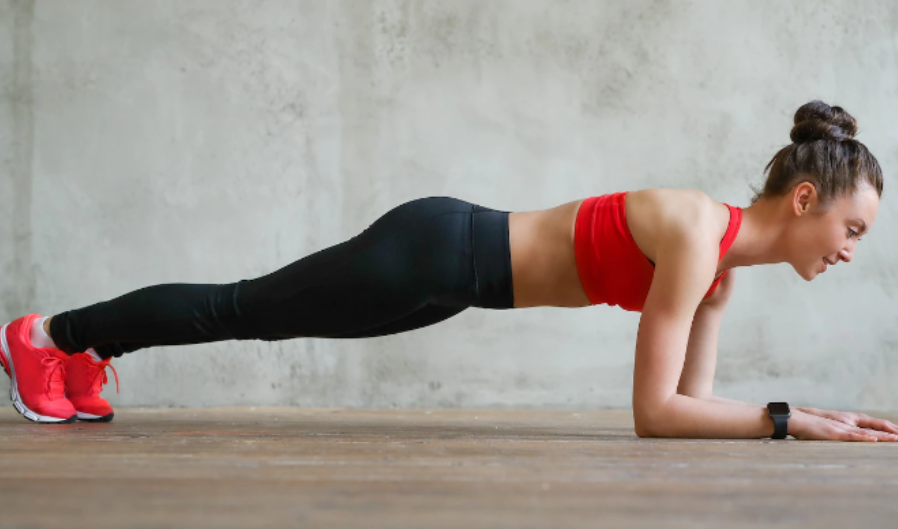
12. Planks
Planks aren’t just trendy—they’re genuinely one of the best core exercises. They’re static, meaning you hold a position, which builds endurance in your core muscles. This translates to better posture and improved performance in every other exercise.
How to do it: Start on your forearms and toes, creating a straight line from your head to your heels. Hold this position for 20-60 seconds, keeping your core tight and your hips level. Don’t let your hips sag toward the ground.
Progression: Once 60 seconds feels easy, try side planks, planks with leg raises, or planks on an unstable surface like a stability ball.
13. Dumbbell Rows (Single-Arm)
Single-arm rows force your core to stabilize as you work one side at a time, making them incredibly functional. You’ll notice your core working much harder than with standard barbell rows.
How to do it: Place one knee on a bench and hold a dumbbell in the opposite hand. Row the dumbbell toward your hip, squeezing your back. Lower it and repeat for reps before switching sides.
14. Cable Woodchops
Woodchops work your core rotationally, which is how your core actually functions in real life. You’re not just moving up and down—you’re moving in multiple planes, which builds functional strength.
How to do it: Stand with a cable machine set to chest height. Hold the handle with both hands and rotate your torso, bringing the handle diagonally across your body as if chopping wood. Return to center and repeat. Do all reps on one side before switching.
15. Farmer’s Carries
These are deceptively simple but incredibly effective. You’re just carrying heavy things, which builds grip strength, core stability, and mental toughness. It’s also practical—how often do you need to carry groceries or luggage?
How to do it: Pick up heavy dumbbells or kettlebells and simply walk. Maintain good posture and let your core do the work of stabilizing you. Walk for 30-60 seconds.
16. Medicine Ball Slams
Medicine ball slams are explosive and satisfying. They build power and core strength while also being a great stress reliever. There’s something primal and cathartic about slamming a ball into the ground.
How to do it: Hold a medicine ball overhead. Slam it into the ground with force, catching it on the bounce or picking it back up. That’s one rep. Do these explosively—this isn’t about moving slowly.

How to Get Started: A Practical Plan
Now that you know the exercises, let’s talk about actually getting started without feeling overwhelmed.
Week 1-2: Get Comfortable
Your first priority is learning proper form. That means using lighter weight than you think you need. Yes, really. Ego is the enemy of progress. When I started lifting, I had to check my ego at the door. Perform 2-3 strength training sessions per week, doing 2-3 sets of 8-12 reps for each exercise. Focus entirely on moving correctly.
Your beginner workout template:
- Warm up with 5-10 minutes of light cardio
- Push-ups or assisted push-ups: 2 sets of 8 reps
- Dumbbell rows: 2 sets of 8 reps
- Squats: 2 sets of 8 reps
- Deadlifts: 2 sets of 8 reps
- Planks: 2 sets of 20-30 seconds
- Cool down and stretch for 5 minutes
Week 3-4: Build the Habit
You should be feeling more comfortable now. Continue the same routine but increase to 10 reps per set. Add one additional exercise from the list each week. The goal isn’t to look like you’ve been training for a decade—it’s to build consistency. This is where people either fall off or commit. Make it a non-negotiable part of your schedule.
Week 5+: Progressive Overload
This is where strength training gets fun. Progressive overload means gradually increasing the challenge. You might add more weight, more reps, or more sets. Change is what drives progress. This isn’t about massive jumps—it’s about small, consistent improvements that compound over time.
Common Mistakes I See Beginners Make
I’ve watched hundreds of people start strength training, and certain patterns keep emerging.
Mistake #1: Too much, too soon. The person who does an hour-long workout on day one and then quits because they’re too sore. Start conservatively. You can always do more next week. Soreness is not a badge of honor—it’s a sign you overdid it.
Mistake #2: Ignoring form for weight. Ego lifting—using more weight than you can handle with good form—leads to injuries and poor results. Light weight with perfect form beats heavy weight with sloppy form every single time. Injuries will set you back months.
Mistake #3: Not eating enough. Your muscles need fuel to grow. If you’re doing strength training but eating too little, you’re fighting against your own progress. Make sure you’re getting enough protein—aim for about 0.8-1 gram per pound of bodyweight daily.
Mistake #4: No recovery plan. Skipping sleep or never taking true rest days means your body never gets the chance to adapt and build muscle. Aim for 7-9 hours of sleep per night. Seriously, don’t skip this.
Mistake #5: Doing too many exercises. Analysis paralysis is real. Stick with the basics for at least 8-12 weeks before trying advanced techniques. Master the fundamentals first.
The Tools You’ll Need
Here’s the good news: you don’t need much. Many of these exercises can be done with just dumbbells and your bodyweight. If you’re starting at home, invest in:
- A pair of adjustable dumbbells (20-50 lbs range)
- A resistance band set (various resistances)
- A pull-up bar (optional but valuable)
- A yoga mat
That’s it. You don’t need an expensive gym membership to build real strength. Some of the strongest people I know train primarily at home.
The Mindset Shift You Need
Let me tell you something that nobody talks about enough: strength training is as much mental as it is physical.
When you show up to train, especially on days when you don’t feel like it, you’re building something deeper than muscle. You’re building character. You’re proving to yourself that you can commit to something, even when it’s hard. That carries over into everything else in your life.
The first time you notice that a task that used to feel hard now feels easy—that’s the power of strength training. A suitcase that felt heavy is now light. Carrying groceries with one trip instead of two. Playing with kids or grandkids without getting winded. These moments accumulate into a completely different quality of life. You start believing in yourself differently.
Answering Your Biggest Questions
How long before I see results? Most people notice subtle changes in how they feel within 2-3 weeks. Visible physical changes typically take 4-8 weeks with consistent training and proper nutrition. Mental changes often come first.
Can I build muscle and lose fat at the same time? Yes, especially if you’re new to strength training. It’s called “body recomposition,” and beginners experience it regularly when eating well and training consistently.
What if I’m intimidated by the gym? Consider starting at home, finding a beginner-friendly gym, or working with a personal trainer for a session or two to learn the basics. Many people are far less judgmental than you think. Most gym-goers respect someone putting in the work.
Do I need to be flexible or in shape to start? Nope. Strength training will actually improve both. Just start where you are, with what you have.
What should I eat? Focus on getting enough protein, eating whole foods, and staying consistent. You don’t need to be perfect. Consistency beats perfection every single time.
Your Action Plan: Starting Today
Don’t wait for Monday. Don’t wait for next month. Here’s what you do today:
- Pick three exercises from this list that appeal to you most.
- Watch a video on proper form for each one.
- Do one set of each this week—just to try it.
- Notice how you feel.
That’s it. That’s the start.
By next week, you’ll do two sets. The week after, you’ll add a fourth exercise. Before you know it, you’ve built a routine that’s actually sustainable because you didn’t try to overhaul your entire life in one day. Small actions create big results over time.
Final Thoughts
Strength training changed my life, and I’ve seen it change countless other lives too. It’s not about becoming an athlete or obsessing over your physique. It’s about building a stronger version of yourself—physically and mentally.
The 16 exercises in this guide are proven, time-tested movements that work. Combined with consistency, proper nutrition, and patience, they’ll deliver results. But more importantly, they’ll build a foundation of strength that carries you through every decade of your life.
You’re already on the path by reading this. The next step is taking action. So what are you waiting for? Start today. Start small. Just start.