Here’s something most bottles won’t tell you: the timing of your dose can matter almost as much as the dose itself. A 2021 clinical trial found that participants who took black seed oil consistently at the same time each day saw better results in blood sugar and cholesterol markers than those who took it sporadically. So the real question isn’t just “when to take black seed oil, morning or night”
I get asked about black seed oil timing constantly, and honestly, there’s no single magic hour stamped on the bottle. But smart, science-backed reasons point to one approach or the other, depending on your goals. In this guide, I’ll walk you through exactly when to take black seed oil, morning, night, or somewhere in between, so you can get the most out of every drop.
Key Takeaways
- Both morning and night work; black seed oil doesn’t have a strict “best” time, but consistency matters more than the clock.
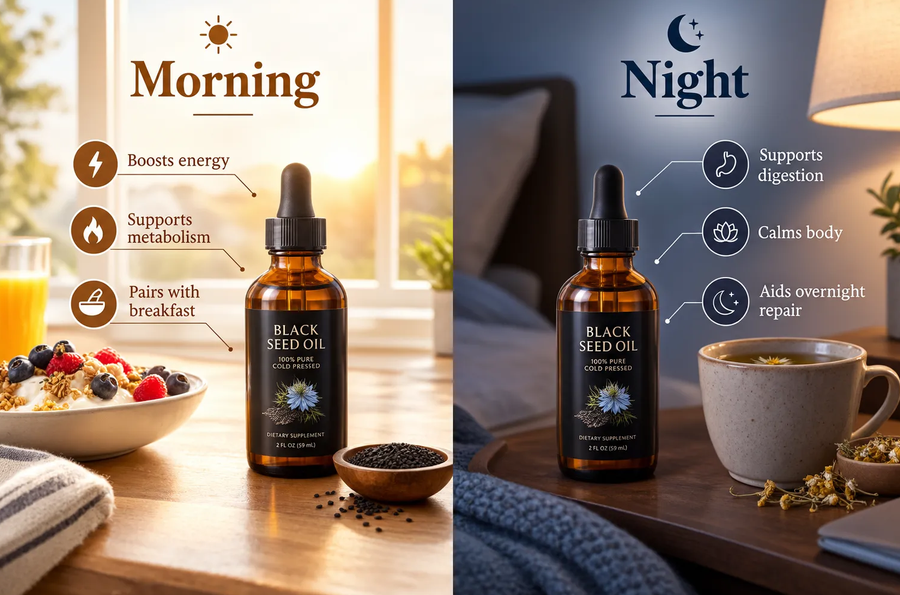
- Morning doses may support energy, metabolism, and appetite control throughout the day.
- Nighttime doses may support digestion, relaxation, and the body’s natural repair cycle while you sleep.
- Taking it with food, regardless of time, reduces stomach upset and may improve absorption.
- Splitting your dose (half in the morning, half at night) is a popular strategy for steady, all-day benefits.
What Is Black Seed Oil and Why Timing Matters
Black seed oil comes from the seeds of Nigella sativa, a flowering plant that’s been used in traditional medicine across the Middle East, South Asia, and North Africa for thousands of years. Its key active compound, thymoquinone, is what researchers believe drives most of its antioxidant and anti-inflammatory effects.
Here’s the thing about timing: black seed oil isn’t a fast-acting stimulant like caffeine, and it’s not a sedative either. It works more gradually, supporting your body’s systems over hours and days rather than delivering an instant jolt. That’s actually good news; it means you have flexibility. But it also means that when you take it can subtly shift which benefits show up more.
Think of it like taking a daily multivitamin. The pill itself doesn’t care what time it is, but your stomach, your schedule, and your goals absolutely do. The same logic applies here. Whether you’re using black seed oil for immune support, skin health, digestion, or metabolic balance, the timing can be tailored to match what you’re hoping to get out of it.
“Consistency beats perfection. The best time to take black seed oil is the time you’ll actually stick with.”

Morning vs Night: Benefits of Each Time to Take Black Seed Oil
Let’s break down what actually happens when you take black seed oil at different points in your day. I’ll go section by section so you can decide what fits your lifestyle and health goals best.
Taking Black Seed Oil in the Morning
Many people prefer taking black seed oil first thing, often right before or with breakfast. Here’s why morning dosing has its fans:
- Energy and alertness: Some users report feeling more mentally clear after a morning dose, possibly linked to black seed oil’s mild effect on blood sugar stability.
- Metabolism support: Taking it early may help regulate appetite and blood sugar throughout the day, according to several small studies on Nigella sativa and metabolic markers.
- Easier to remember: Let’s be real, mornings are when most of us are already taking supplements, brushing teeth, and building routines. Stacking black seed oil into that habit makes it more likely you’ll actually stay consistent.
- Pairs well with breakfast: Since black seed oil is fat-soluble, taking it with a meal that contains some healthy fat (eggs, avocado, nut butter) may improve how well your body absorbs it.
Taking Black Seed Oil at Night
On the flip side, plenty of people swear by taking their dose in the evening. Here’s what that approach may offer:
- Digestive support: Some traditional use suggests black seed oil can ease bloating and support gut comfort, which some people prefer to experience overnight rather than during a busy workday.
- Relaxation: While it’s not a sedative, the calming ritual of taking a supplement before bed, often with warm tea or honey, can become part of a soothing nighttime routine.
- Overnight repair window: Your body does a lot of its repair and detox work while you sleep. Taking anti-inflammatory compounds like thymoquinone before bed may align with this natural repair cycle, though more human research is needed to confirm this timing effect specifically.
- Less competition with other supplements: If your mornings are already packed with coffee, medications, or other pills, nighttime might simply be less chaotic.
Quick Comparison Table
| Factor | Morning Dose ☀️ | Night Dose 🌙 |
|---|---|---|
| Energy support | Stronger association | Minimal |
| Digestive comfort | Moderate | Stronger association |
| Ease of habit-building | High (paired with breakfast) | High (paired with bedtime routine) |
| Best for | Metabolism, focus | Digestion, relaxation |
What Science Says About Black Seed Oil Timing
I want to be straight with you: there isn’t a large body of research that directly compares morning versus night dosing for black seed oil. Most clinical trials simply had participants take a fixed dose once or twice daily without testing whether the time of day changed the outcome.
That said, we can borrow some insight from how thymoquinone behaves in the body:
- Half-life considerations: Thymoquinone is metabolized relatively quickly, meaning its effects don’t linger for a full 24 hours. This is part of why many practitioners suggest splitting doses, once in the morning, once at night, rather than one large dose at a single time.
- Circadian rhythm and inflammation: Some research on inflammatory markers shows they naturally fluctuate throughout the day, often peaking in early morning hours for certain conditions like joint stiffness. This has led some herbalists to suggest a small morning dose may help “meet” that peak.
- Digestive rhythm: Your digestive system tends to slow down in the evening as your body prepares for rest. Taking black seed oil at night, paired with a lighter meal, may reduce the chance of the oil sitting on an empty stomach and causing discomfort.
A 2020 review published on the pharmacological properties of Nigella sativa noted its wide range of effects- antioxidant, antimicrobial, antidiabetic- but stopped short of recommending a specific time of day, largely because human trials weren’t designed to isolate that variable.
In short: science supports the use of black seed oil strongly, but the clock part is still mostly guided by tradition and personal experience rather than hard data.

How to Take Black Seed Oil for Best Results
Regardless of which time you land on, how you take black seed oil matters just as much. Here are the practical rules I recommend to almost everyone.
With Food or Empty Stomach?
This is one of the most common questions I hear, right up there with the morning-versus-night debate. Here’s my honest take:
- Empty stomach: Some people feel fine taking it straight, and a few even prefer it because they feel the effects more quickly. However, black seed oil has a strong, peppery, slightly bitter taste, and taking it without food can occasionally cause mild stomach upset or heartburn in sensitive individuals.
- With food: Taking it during or right after a meal, especially one with a bit of healthy fat, tends to be gentler on the stomach and may support better absorption since thymoquinone is fat-soluble.
My general suggestion? Start with food. If your stomach handles it well after a couple of weeks, you can experiment with taking it on an empty stomach to see if you notice a difference.
Mixing It Into Food or Drinks
A lot of people don’t take black seed oil straight from the spoon, and that’s totally fine. Popular ways to take it include:
- Straight, followed by a small snack
- Mixed into a spoonful of honey to mellow the sharp taste
- Stirred into a smoothie or warm plant milk
- Added to herbal tea (once it’s cooled slightly, since high heat may degrade some compounds)
- Drizzled over salad as part of the dressing
Building a Routine That Actually Sticks
Here’s a simple truth I’ve learned from watching people try (and often quit) supplement routines: the “best” time is the one you won’t skip. If you’re a coffee-first, breakfast-on-the-go kind of person, mornings might slip through the cracks. If you’re someone who always brushes their teeth and unwinds with a book before bed, nighttime might be your more reliable slot.
Try this simple approach for the first two weeks:
- Pick one consistent time (morning or night), don’t overthink it.
- Pair it with an existing habit (breakfast, brushing teeth, evening tea).
- Use a small daily tracker or app to note how you feel.
- After two weeks, decide if you want to switch, split the dose, or stick with what you chose.
Black Seed Oil Dosage Guidelines
Timing only matters if the amount is right, too. While individual needs vary, most research on black seed oil supplementation uses doses in a fairly consistent range.
| Form | Typical Daily Amount | Common Timing Pattern |
|---|---|---|
| Liquid oil | 1/2 to 1 teaspoon, once or twice daily | Morning and/or night with food |
| Capsules | 500-1000 mg, once or twice daily | With meals |
| Ground seed powder | 1-2 grams daily | Mixed into food, any time |
Always start on the lower end of the range, especially in your first week. Black seed oil is potent, and your body needs a little time to adjust; even though it’s a natural product, “natural” doesn’t automatically mean “gentle in any amount.”
Who Should Be Careful With Black Seed Oil Timing
Black seed oil is generally well tolerated, but a few groups should pay extra attention to both timing and dosage:
- Pregnant or breastfeeding individuals: Some traditional sources caution against black seed oil during pregnancy due to potential uterine-stimulating effects. Always check with a doctor first.
- People on blood thinners or diabetes medication: Black seed oil may enhance the effects of these medications, so taking it at a completely different time than your medication (with medical guidance) is often recommended to avoid interactions.
- Those with low blood pressure: Since black seed oil may modestly lower blood pressure, taking it right before intense physical activity or driving might not be ideal.
- People with a sensitive stomach: If nighttime dosing causes any restlessness or reflux when lying down shortly after, switching to a morning dose with breakfast may be more comfortable.
If you’re on any prescription medication, it’s genuinely worth a quick conversation with your doctor or pharmacist before adding black seed oil to your routine, not because it’s dangerous, but because timing around other medications matters for absorption and interaction risk.
Common Mistakes to Avoid
Even with something as simple as a daily oil, people run into a few avoidable snags:
- Skipping days randomly. Inconsistent use makes it hard to notice any real benefit, and you lose the “same time daily” advantage that helps with habit-building.
- Taking it on a completely empty stomach when sensitive. This is the most common reason people report mild nausea or a burning sensation.
- Storing it wrong: Heat and light break down thymoquinone over time. Keep your bottle in a cool, dark cabinet, not on a sunny windowsill.
- Expecting overnight miracles: Black seed oil works gradually. Most people notice subtle shifts over 4-8 weeks, not overnight.
- Ignoring the taste issue and quitting: If the flavor is the real barrier, switch to capsules or mix it with honey instead of giving up entirely.
So, Morning or Night? My Honest Recommendation
If I had to give you one clear answer: there’s no universally “correct” time, but here’s a simple decision framework:
- Want steady energy and metabolic support during the day? Lean morning, with breakfast.
- Want digestive comfort and a calming evening ritual? Lean night, with a light meal or tea.
- Want the most balanced, all-day coverage? Split your dose, half in the morning, half at night.
- Not sure which you’ll actually stick with? Choose whichever time fits your existing routine best. Consistency wins over “perfect” timing every time.
Conclusion
At the end of the day (pun very much intended), the timing of your black seed oil dose is far less important than showing up for it every single day. Morning dosing tends to pair nicely with energy and metabolic goals, while nighttime dosing often supports digestion and relaxation. Splitting your dose can give you a bit of both worlds.
My honest advice? Pick a time today, pair it with a habit you already have- coffee, breakfast, brushing your teeth, or your nightly wind-down- and give it a solid 4 to 8 weeks before judging whether it’s working for you.
Track how you feel, adjust the dose or timing if needed, and always loop in your doctor if you’re on medication. Small, consistent steps with black seed oil tend to beat sporadic, “perfect” ones every time.